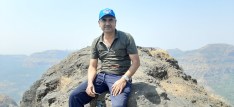
Mount Everest had always been an object of great interest for me. I saw several films and documentaries on Everest only to get the feel and satisfy myself. I had made up my mind that I would not be able to see it, forget climbing.
Sometime in March 2018 my wife’s nephew visited us and talked about his office encouraging employees to go for Everest Base Camp (EBC) Trek. He also talked about the exercise routine required for preparation. This discussion triggered my interest. As a minimum I decided to follow the exercise routine for a few months. Being a fitness freak my wife Seema also agreed to follow it.
Then I realized, that there was no sense in open ended exercise routine. The desire to see the mountain started becoming stronger and that’s when we decided to go for the EBC trek.
I came to know about GGIM (Guardian Giripremi Institute of Mountaineering, Pune), contacted them and things started rolling. I did not know about GGIM before so asked them for some references. After talking to people I got the confidence to enroll for EBC trek with GGIM, scheduled in September- October 2018.
Two years after the EBC trek, I still remain associated with GGIM for different programs. Their vision and efforts to promote mountaineering are commendable. It is indeed a very good institute sincerely trying to promote and help people of all age groups to visit mountains.
A major part of preparation routine was to climb Sinhgad on every weekend. For four months Seema and I followed it religiously.
Sometimes we took the longer path of road, we climbed it in heavy rains, climbed it in situations when we were the only two persons in the area, experienced land slides happening in front of us, once we were stuck due to a ‘Bandh’ but we carried on and it paid. Not only we became confident of climbing but also gained physical strength. Habits die hard, even today I have continued the practice of climbing Sinhgad whenever there is an opportunity.
Seema did much more diligent work. She watched several videos on YouTube and gathered a lot of information.
Many people laughed at us when they heard about our plans but GGIM team was very supportive and imparted a lot of confidence to us.
We were briefed by GGIM before the trek. Most important instructions were to walk slowly, drink ample water and not to avoid meals. The meals were going to consist of mainly Dal-Rice and Potato curry.
Finally after buying all the required gear mainly Sticks, Trekking Shoes, Light clothes, Water Bottles, Night Lamps, Sacks, Knee Caps and lots and lots of dry snacks we were all set. On 20th September 2018 we boarded the flight to Kathmandu.
Kathmandu
Nabang Sherpa of Peak Promotion received us on the airport with garlands and accompanied us to Hotel Himalaya in Thamel area. It is a simple but decent hotel. They do not offer lunch but have a continuous supply of Tea and Coffee. A restaurant opposite the hotel served excellent food. Sanjivani, one of our companions from Mumbai, had arrived before us. Three of us spent the evening and the next day going around Kathmandu. Will write about it sometime later.
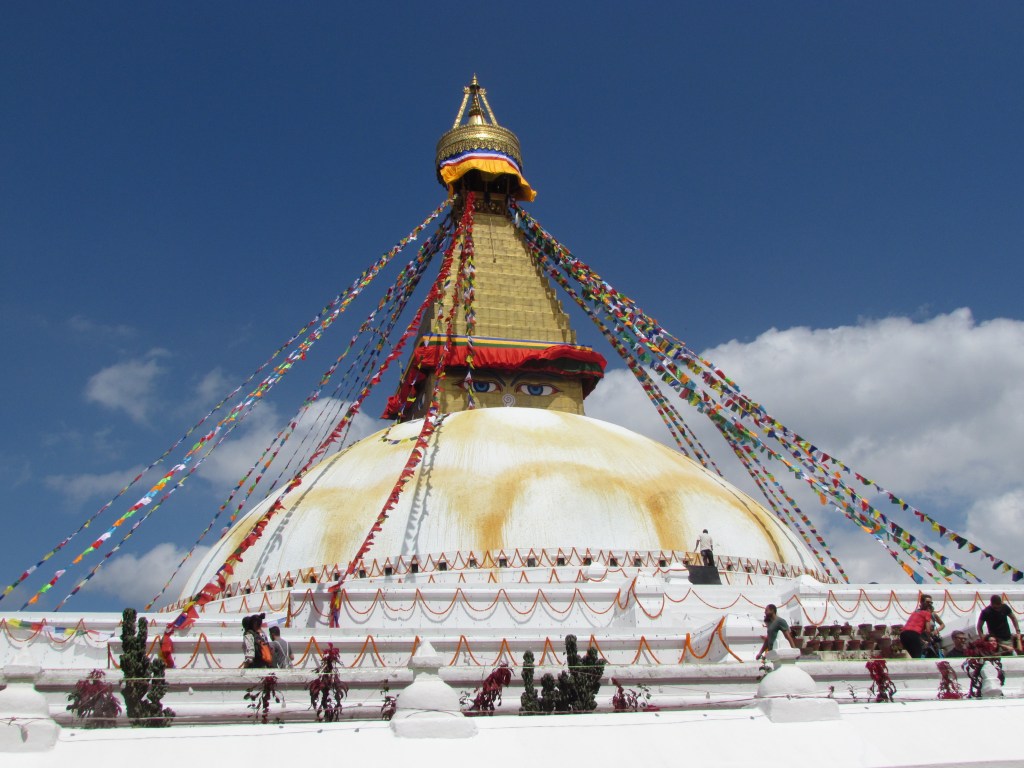
Next day all remaining participants in the group and our leader Dinesh Kotkar arrived. There were 12 participants in total. Nabang and Dinesh were going to lead with the help of three other sherpas.
There was a briefing in the evening by the chief of Peak Promotion Mr. Keshav. We were issued duffle bags, feather jackets and sleeping bags. Limiting the luggage to 10 kg was a challenge. Flight from Kathmandu to Lukla allows only 10 kg baggage and 5 kg in cabin. Warm clothes took most of the space so we had to leave a lot of eating stuff and binocular in Kathmandu. This was a big mistake because later on we realized that we would not require so many clothes. Two or maximum three dresses were more than sufficient.
Next morning, we had to catch the 7 AM flight to Lukla.
1st Day: Kathmandu – Phaplu
Lukla is the most dangerous airport in the world. It is situated at an altitude of 2800 meters above the sea level. The runway is only 400 meters long . It does not have ATC tower so the entire landing and takeoff process depends on the skill of the pilots. The plane has to gain high speed before reaching the airport and then the pilot has to stop it skillfully so as not to collide with the wall at the end of runway. Only 14 seat flights and helicopters can fly to Lukla. Weather in Lukla keeps changing every moment and many a times the flights get cancelled. On a number of occasions pilots have to decide not to land after reaching Lukla and they take you somewhere else. No wonder it requires a lot of good luck to get into the flight.
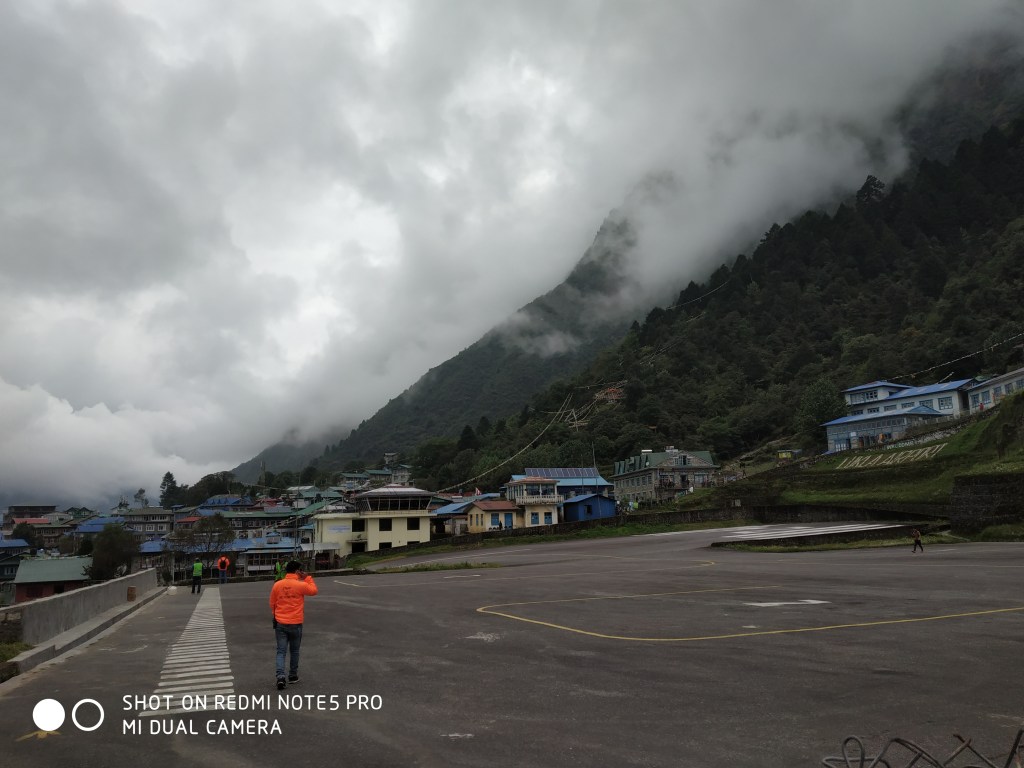
We reached the airport around 6:30 am and were told to wait. The domestic airport terminal of Kathmandu airport resembles an ST stand in Maharashtra. While waiting for our turn I started chatting with a group of trekkers from Mumbai. They had been coming to the airport for three days with a hope of getting into Lukla flight but the flights had been cancelled.
We were told that finally our flight would arrive from Lukla and pick us up around 10 am. Boarding passes were issued and we entered the lounge. After waiting till 11 am, we came to know that the flight from Lukla had not returned due to bad weather. Finally at 12 pm cancellation of the flight was announced.
Our leadership team was ready with a backup plan. Plan was to drive to Phaplu and then decide. We had our first Dal-Rice lunch and boarded Sumo for a long drive of 11 hours. It was a scenic drive providing great views of Himalayan farms, Nepalese villages and river Dudh Koshi. Dudh Koshi accompanied us till sunset and sometime after. The road looked good. Around 5 pm we had a tea break. The site of the river was breathtaking.
Soon it was dark and the drive started becoming terrible. Lack of light hid the dangerous nature of the drive from us. Land slides taken place earlier had left large stones in the way, road was completely missing at some places. Driver was driving very skillfully on such a bad road with a valley on a side.
We had to cross the river at a spot and I realized that there was no bridge. It was under construction with only two pillars completed. Sumo entered the river bed and drove on a bumpy rocky surface. Then it entered the water and crossed the river. I breathed a sigh of relief once the river was crossed but it was not over yet. It started straight on a hill where the road was completely missing. Believe me, we people living in cities, can never imagine driving on such surface.
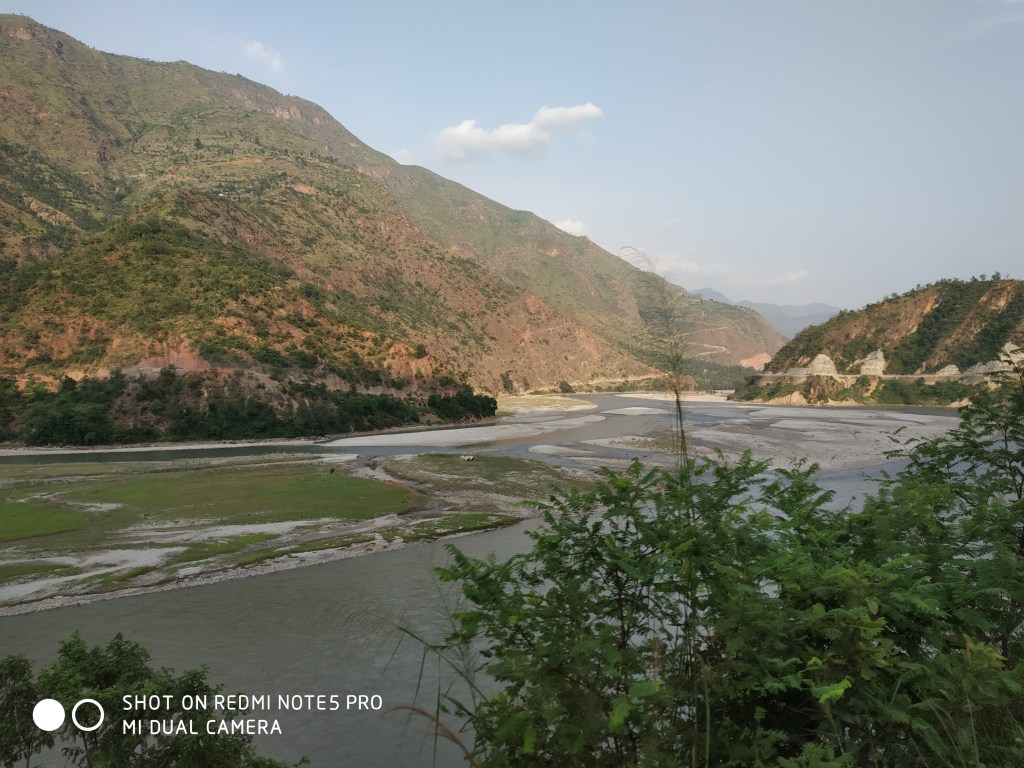
Finally tar road started again. We had dinner in a roadside small restaurant lit by a few bulbs. Around 11 pm, the team took a small break and we could see snow clad Himalayan peaks shining in the moonlight on our left. It was a magnificent site to be remembered for the lifetime. One must visit Nepal to see the peaks shining in the moonlight in a completely dark surrounding free from artificial lights.
Finally at around 1:30 am we reached Phaplu and checked into a Tea House to have our first experience.
Day 2: Phaplu – Lukla – Phakding
Tea House is a unique type of hotel found in the Himalayan regions of Nepal. Mostly built for trekkers, these hotels offer bare necessities. Rooms are made up of wood or ply and provide two beds and a dim lamp. The lamp is good enough to locate the objects but not sufficient for reading. Toilet facilities are common for all. Dining hall is nicely furnished and decorated and is equipped with a central heater. Trekkers spend most of their time in the dining hall due to warmth.
Charging the mobile phone for two hours or a bucket of hot water for bath costs about 200 to 400 Rupees. Bathing is generally ruled out due to high cost and worse …cold.
The EBC trek exposes you to the tough living conditions of the people in this region and makes us aware of all the comforts that we enjoy in our everyday life.
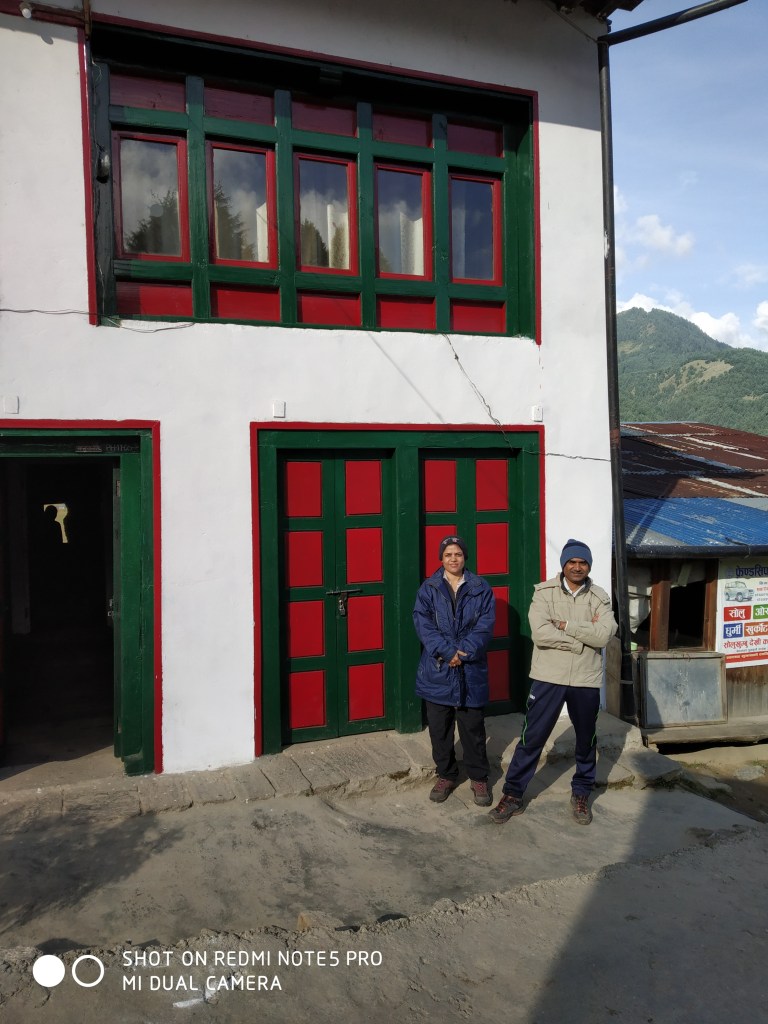
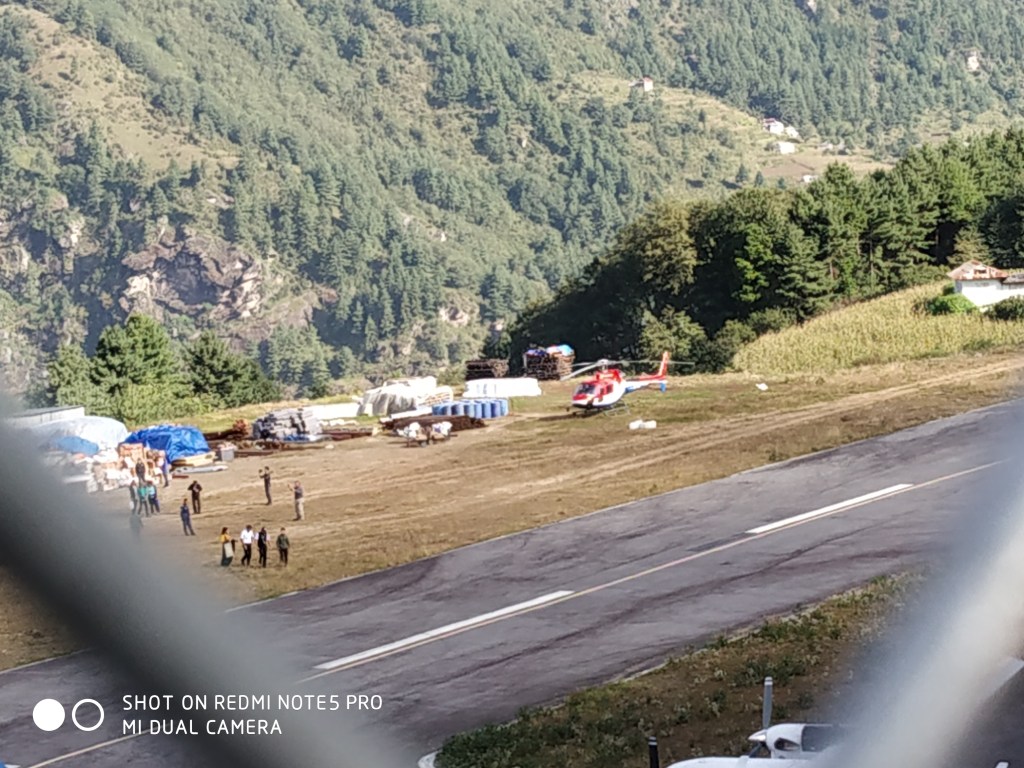
Once we were ready in the morning after breakfast, discussions on the next move started. A walk around Phaplu reveled that there was an airport across the road. All the flights that had taken off for Lukla, on the previous day had been diverted to Phaplu due to bad weather. We could see a group of American trekkers performing their exercise routine on the runway. Lukla is about two days walk from Phaplu.
Weather in Lukla continued to remain unfriendly for flights. By 10 am when everyone was mentally getting ready for walk to Lukla, Dinesh rushed into the dining hall and told us that there was a small window of weather available for helicopters. Immediately the atmosphere changed and the moods were charged. We reached the airport and waited on the runway to have our first helicopter ride in life.
Where in the world do you get an opportunity of clicking pictures on the runway?
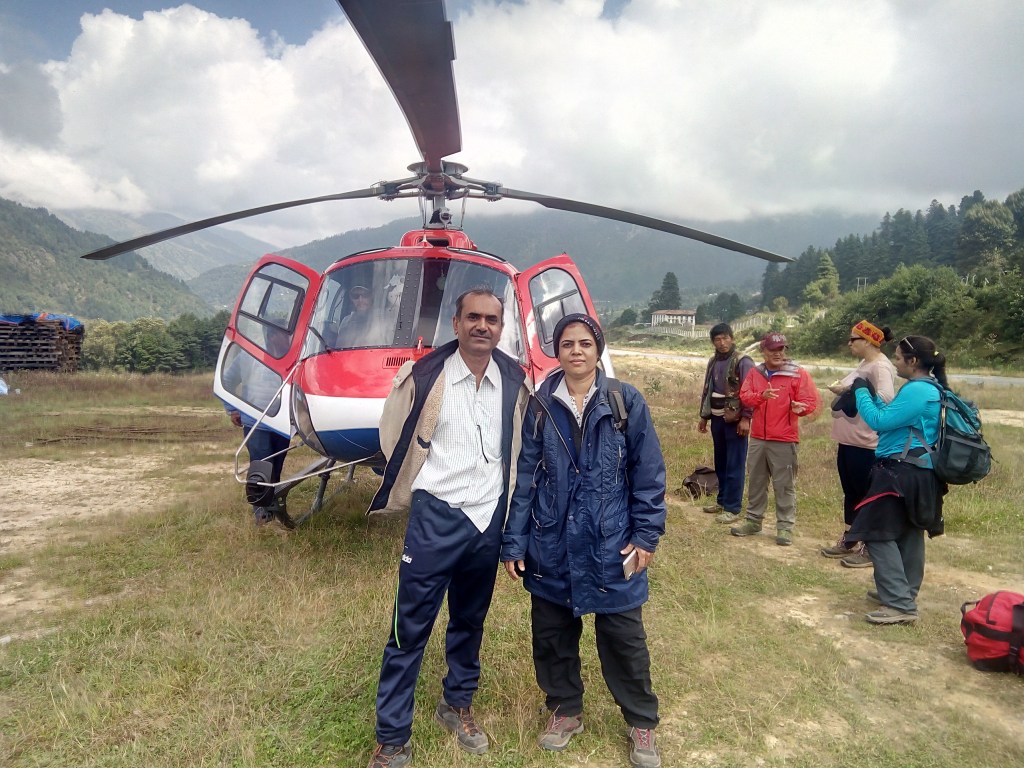
After a thrilling helicopter ride, we reached Lukla. The entire group arrived in three batches. We had lunch, luggage was loaded on yaks and the trek began.
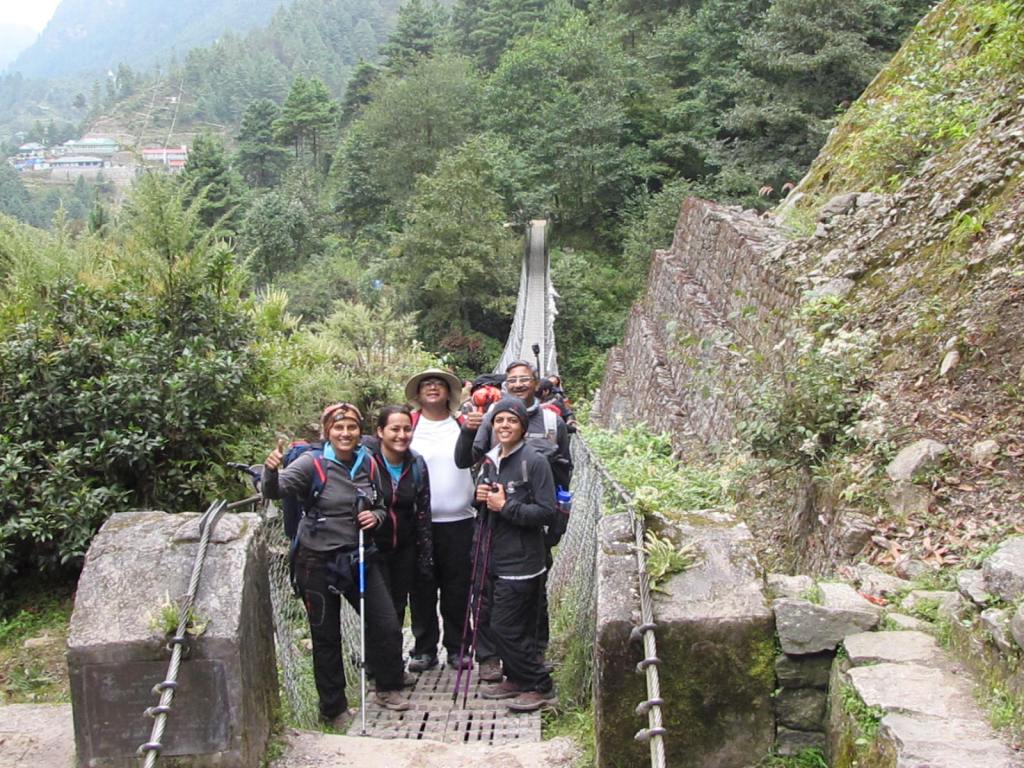
We were headed to our first halt at Phakding. Walk was easy as this part of trek actually takes you down 300 meters. After crossing some suspension bridges and walking along the banks of Dudh Koshi for 4 -5 hours we reached Phakding around 5:30 pm.
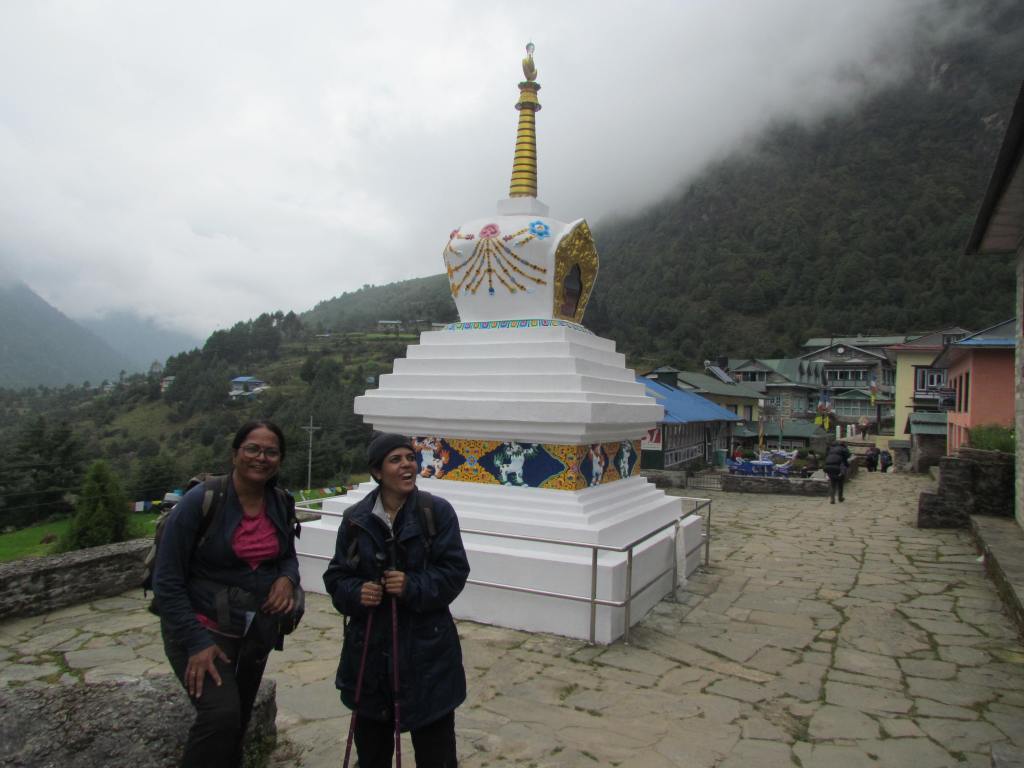
Surprisingly we were issued rooms with attached bathrooms. It rained heavily at night and we spent the night listening to the roaring river, very close to the hotel.
Day 3: Phakding – Namche Bazaar
Phakding to Namche Bazaar is the longest stretch in the entire EBC and involves a long upward climb. Moreover, altitude starts showing its impact when you reach Namche after about 10 hours. We were instructed to walk slowly, drink lots of water and not to miss meals to counter the altitude sickness. Symptoms like headache, loss of appetite are common and one has to live with them to allow the body to get adjusted.
During the briefing at Kathmandu, Mr. Keshav of Peak Promotion had said “Agar aap Namche Bazaar pahunch gaye to samaz lena aadha EBC ho gaya” ( If you reach Namche Bazaar successfully, consider half of the trek is done)
We started around 8 am for Namche. Path led us upwards sometimes followed by downward climbs. Around 10 am, we reached Monjo check post where the pass for EBC trek needs to be procured. Immediately after the check post, there was a steep climb downwards with a beautiful waterfall on the left.
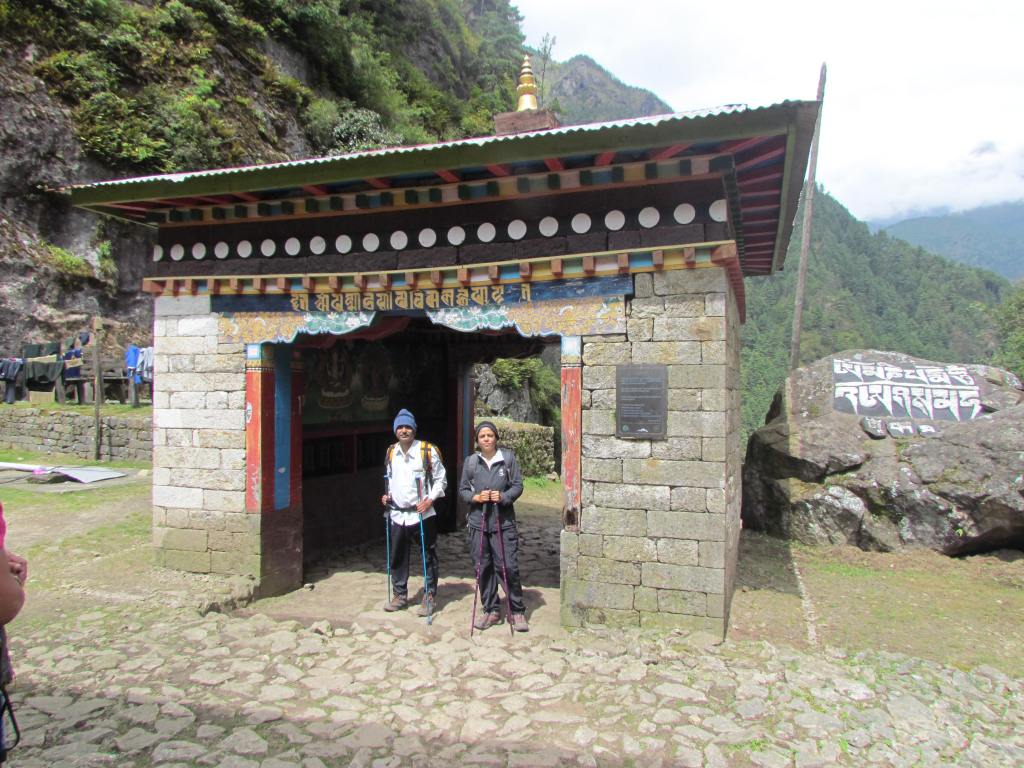
The walk was comfortable till lunch. We had lunch in Jorsale and crossed the river. After walking on boulders for a small distance a long upward climb started. While starting the climb we could see the famous Hillary Bridge at a height of about 400 feet. There are two bridges parallel to each other located at different heights. Upper bridge leads to Namche Bazaar.
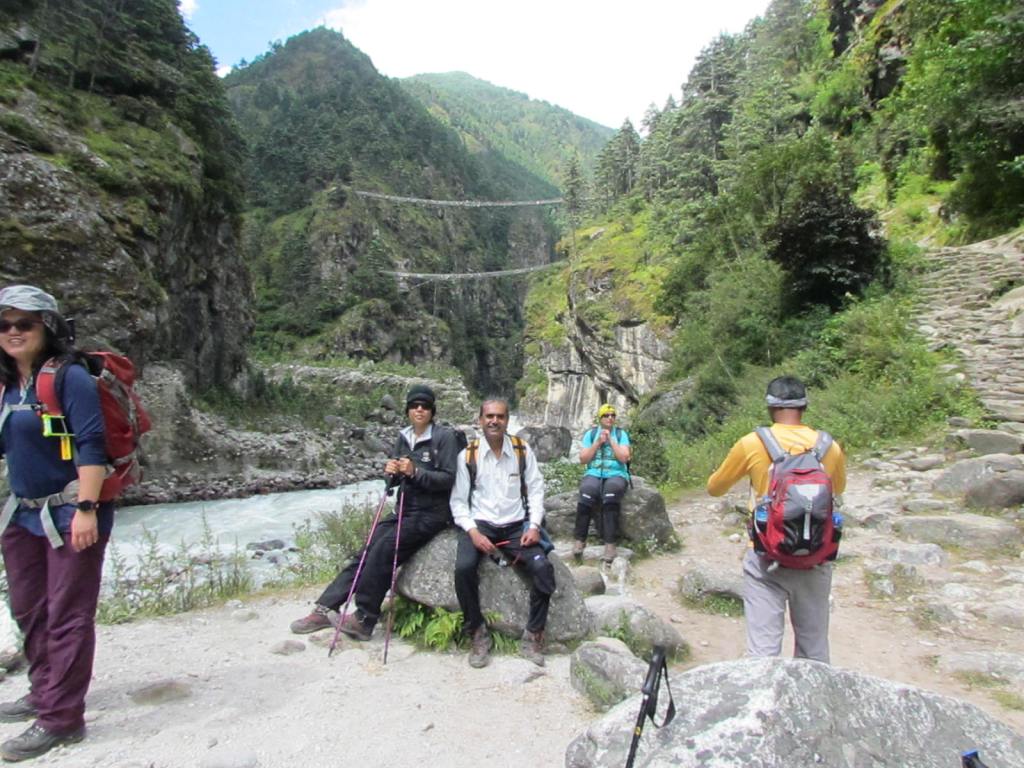
I had plans to take pictures on the bridge but the wind was very strong and cold. I had to run on the bridge to save from wind. There is a large rock at the end. I rested behind it to get cover. The walk afterwards was extremely tiresome.
A sherpa accompanied us carrying a gas cylinder on his back throughout the trek. The gas cylinder helped us in providing ample hot water and prevented water related diseases.
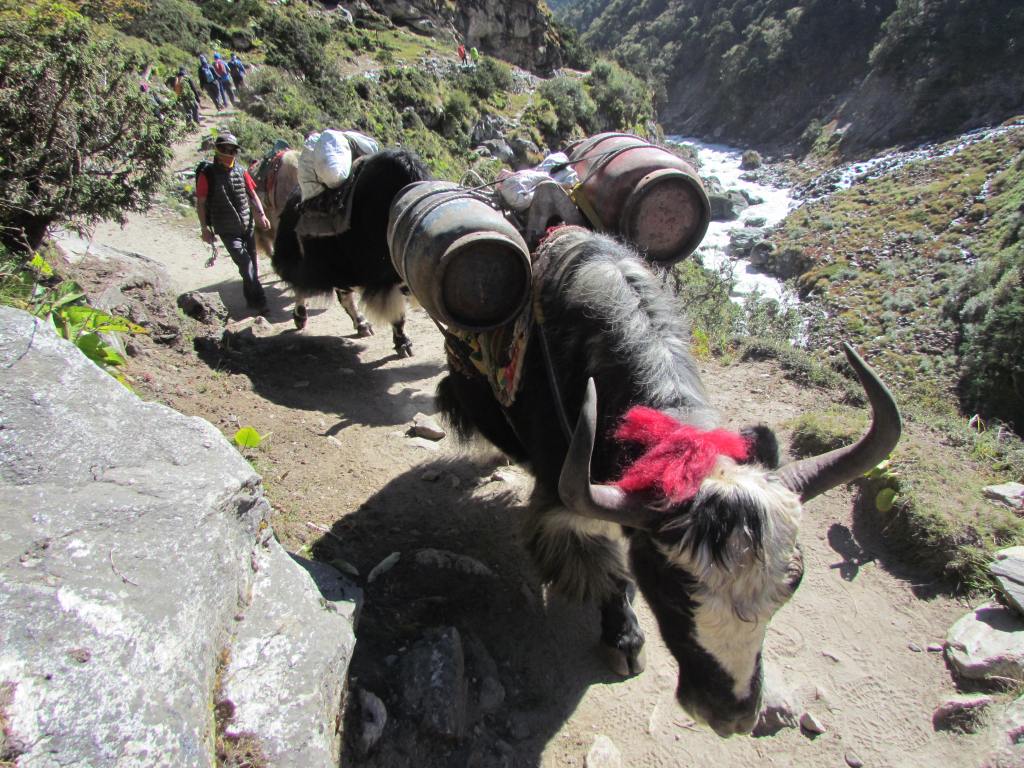
Finally Namche seemed to be within the sight as we crossed the check post. The relief was short lived as I spotted Manish at a distance of about a kilometer, he was climbing upwards and was well almost 200 – 300 feet higher than us. There was a village in between and the road was blocked by yaks. Yaks have a right of the way.
Myself, Seema and Shilpa were walking together. Rest of the group had either reached Namche or were far behind. A board at a junction showed Namche to left, so we took the steps and reached the heart of the town in no time. Hotel was at the center of the town. After stretching exercise, we came to know that rooms with attached bathrooms were available at reasonable price. As we had to spend two days in Namche, almost everyone preferred to opt for special room. The room was three floors down and carrying the bags took the breath out. It was equipped with heated bed and hot water.
I took a bath and realized that it was a big mistake. The thermal shock after coming out of bathroom was so severe that it made me shiver for half an hour. I was lucky not to fall sick.
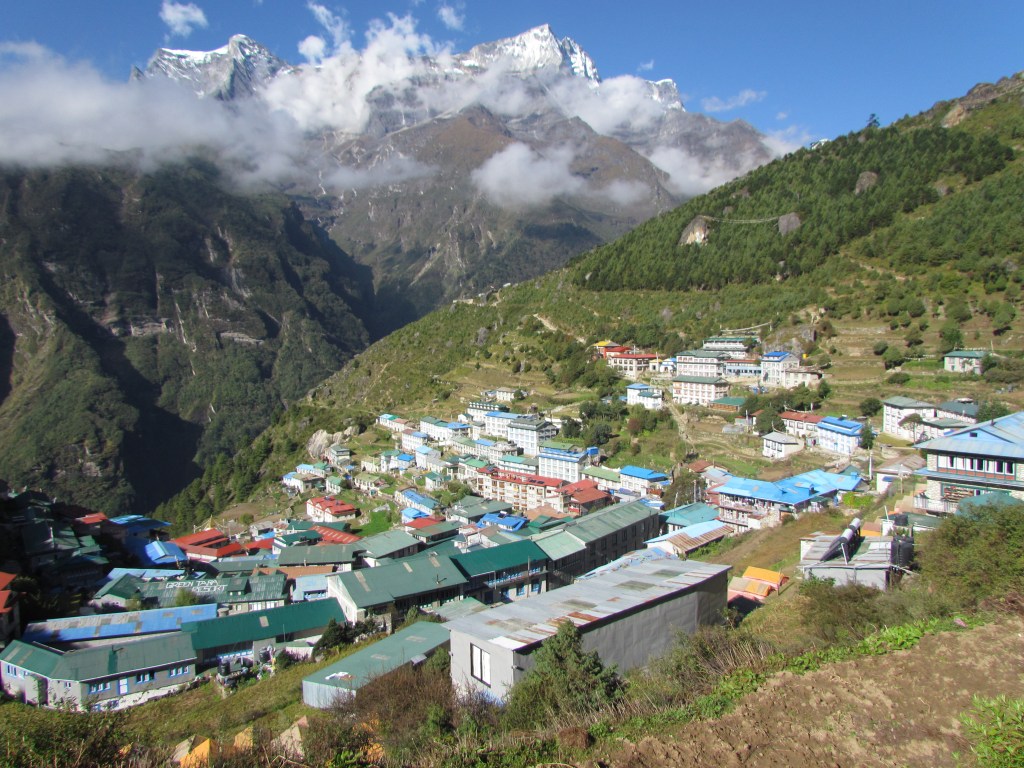
Namche Bazaar is an interesting town. It derives its name from its saucer shaped structure. Namche means saucer in Nepalese. This town has the biggest market in the region and offers a final chance for the trekkers to buy anything that is missed from the list. It is located on the slopes of hill converging at the center. One has to climb steps to move across the town. The Irish Pub in Namche, is the one of its type located at the highest altitude. Like all other the towns in the EBC region, Namche market also has a number of bakeries.
Day 4: First sight of the Mt. Everest
Next day I woke up with Seema’s scream. She had opened the window of the room and was excited to see the view of mountains. I have stayed in many hotels in my life but only a handful of them have offered a view to remember. This room offered a superb view of the black Himalayan peak called Kongde Ri, glowing in the morning sun. The sun had started melting the snow so the waterfalls were gaining momentum. There is a beautiful monastery on the hill.
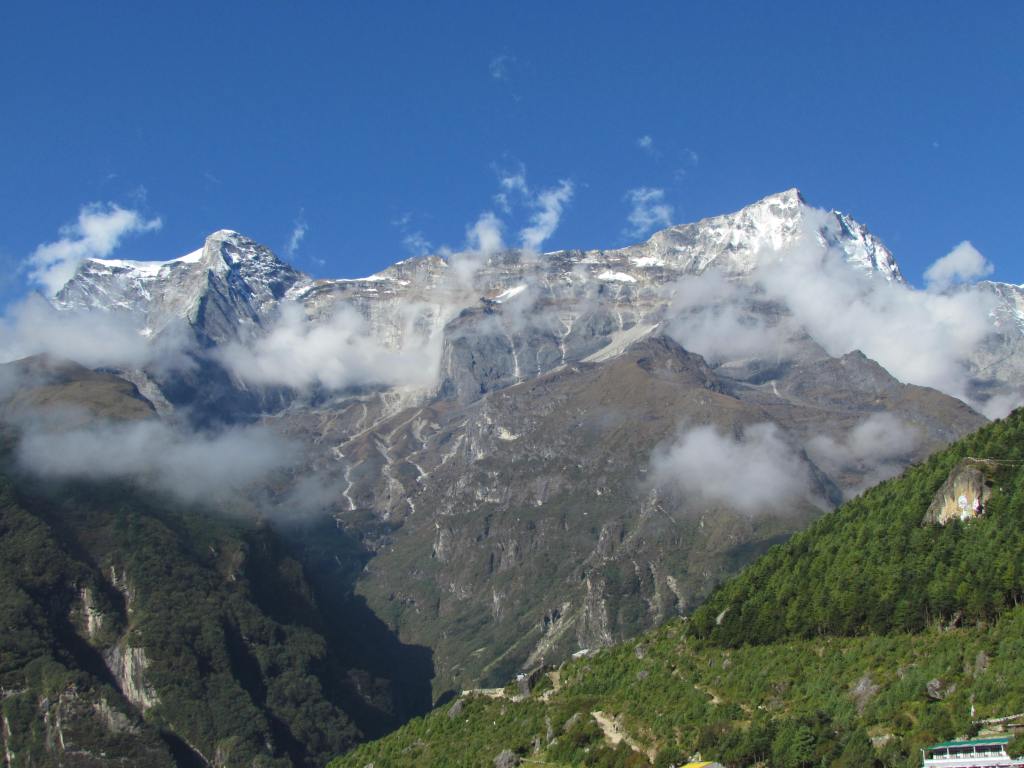
It was supposed to be the rest day for acclimatization. A practice trek on a nearby mountain had been arranged. Altitude had started showing its effect and the climbing was becoming tiresome. There is a restaurant called Hotel Everest View on the hill. The hill did not have trees on the top but was covered with greenery and flowers of numerous shades.
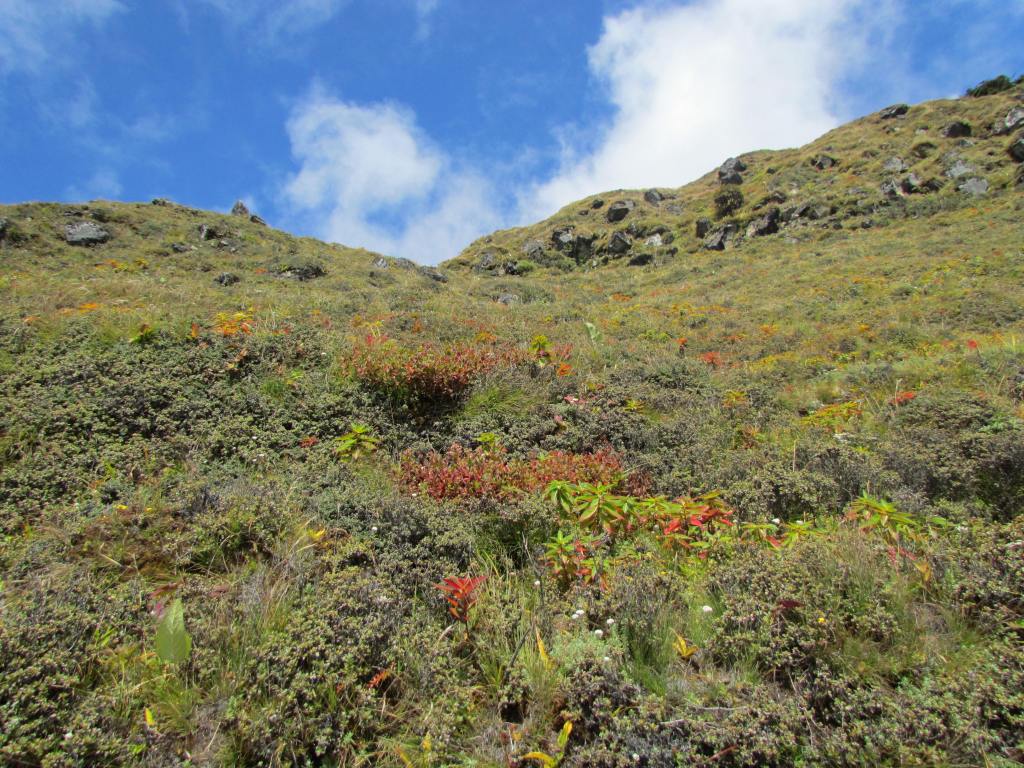
By the time we could climb to the top, cloud formation had already started and the chances of viewing the great peak were getting less and less. There is a rock on the way. Nabang asked us to climb it to see if Mt. Everest was visible. Everyone rushed and we had our first site of Mt. Everest. It showed up for a few seconds and got engulfed in clouds again. That is one of the happiest moment in my life. All the efforts had paid up as we had seen it with finally, although for a few seconds. I took a look around. A fellow lady trekker was praying with tears in her eyes.
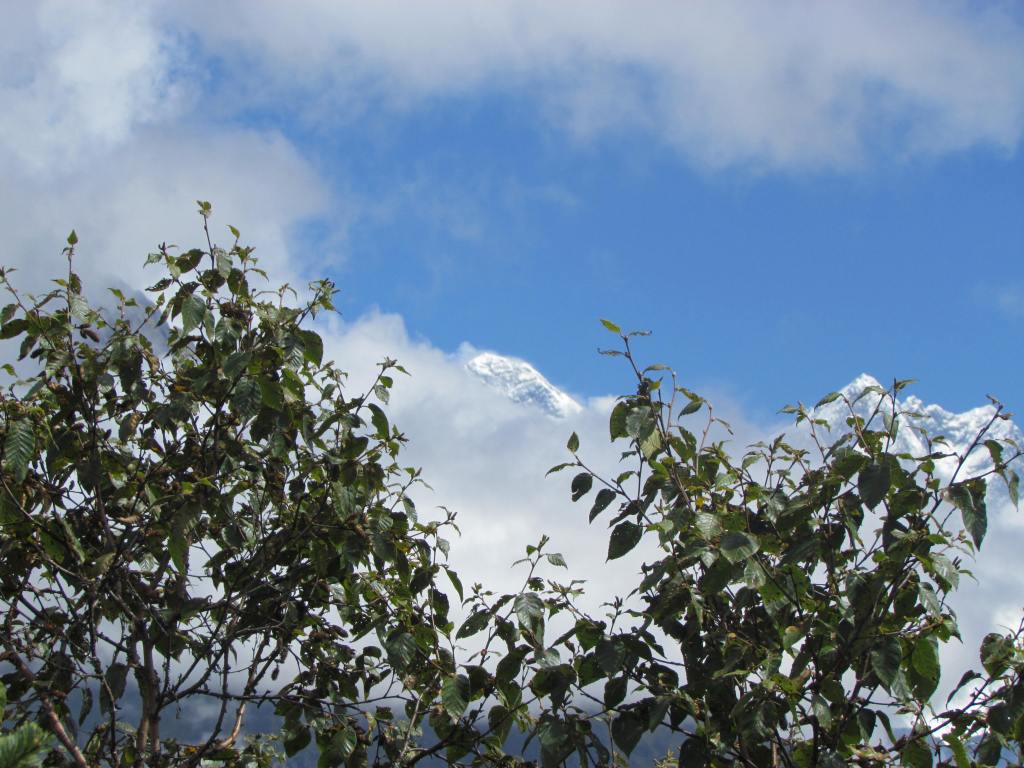
Hotel Everest View has a balcony that offers view of Mt. Everest, Ama-Dablam, Lhotse and some other peaks. We had coffee and waited for the view to be cleared but Mt. Everest could be seen intermittently only for a few seconds. It is so far away from Namche that other mountains in the region appear bigger.
An organization called ‘Sagarmatha Next’, is working in this region to conserve the nature. A Swedish gentleman (Sorry forgot his name .. I think it is Gary) working for this organization has spent many years in Namche Bazaar. He assured us that we would get a clear view from Tengboche on the next day.
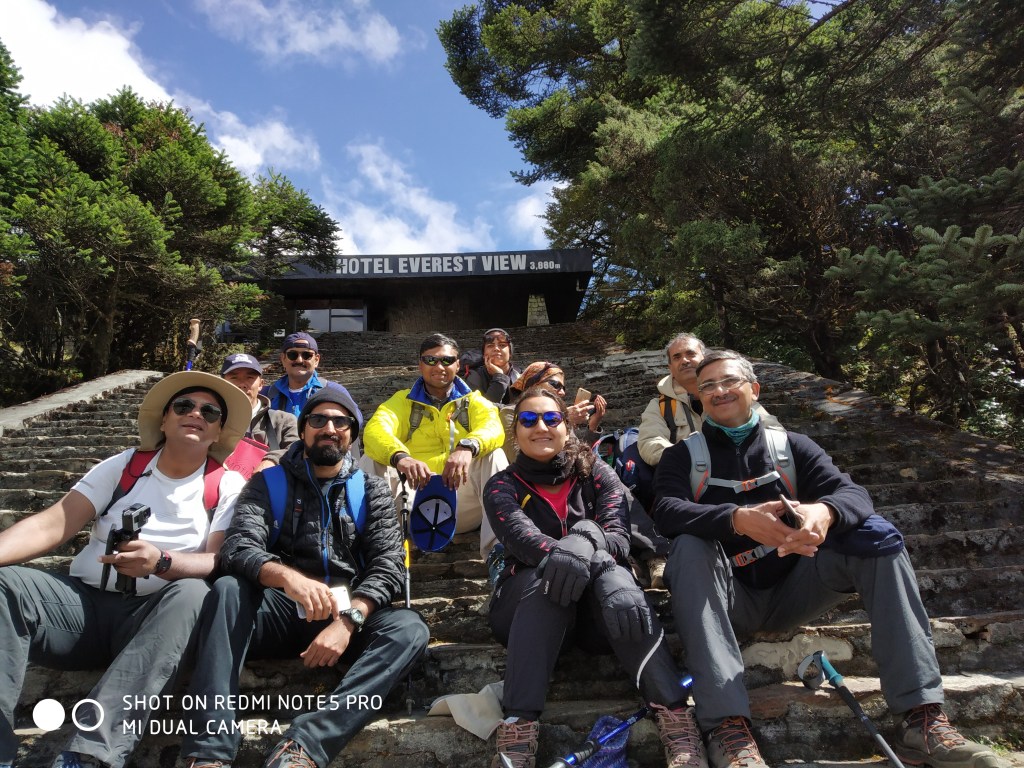
Back – Dorje, Sushil, Dinesh, Seema, Archana and Myself
Namche Bazaar is a beautiful town and I wish one could spend a vacation there.
Day 5 : Namche Bazaar – Tengboche
Next day we started for Tengboche. A break of 10 minutes was needed after climbing the steps of Namche. The path ahead was fairy leveled and walk was easy. Valley on the left was probably 5000 feet deep with the river flowing in it. The sky was clear. After some time we had a clear view of Mt. Everest. It was in front of us and continuously visible till we had our lunch break at Phungi Tanga. On the right we could see twin peaks of Ama Dablam.
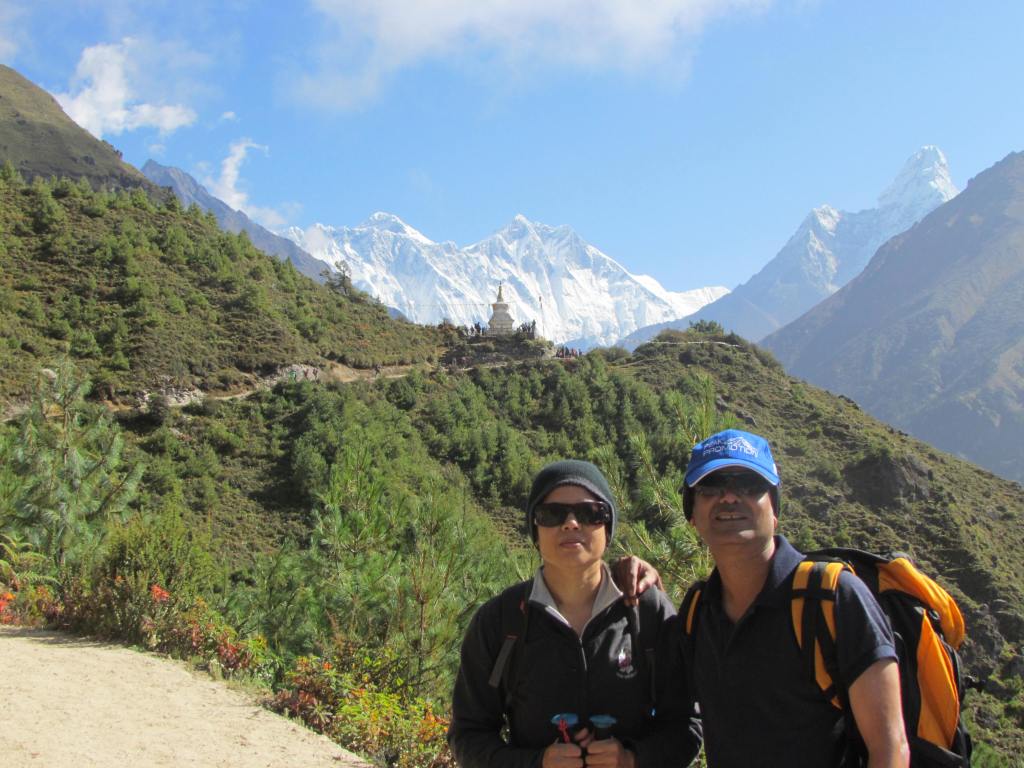
Once again it was an easy walk till lunch and then the upward climb started. We reached Tengboche around 3:15 pm. It was extremely cold and cloudy.
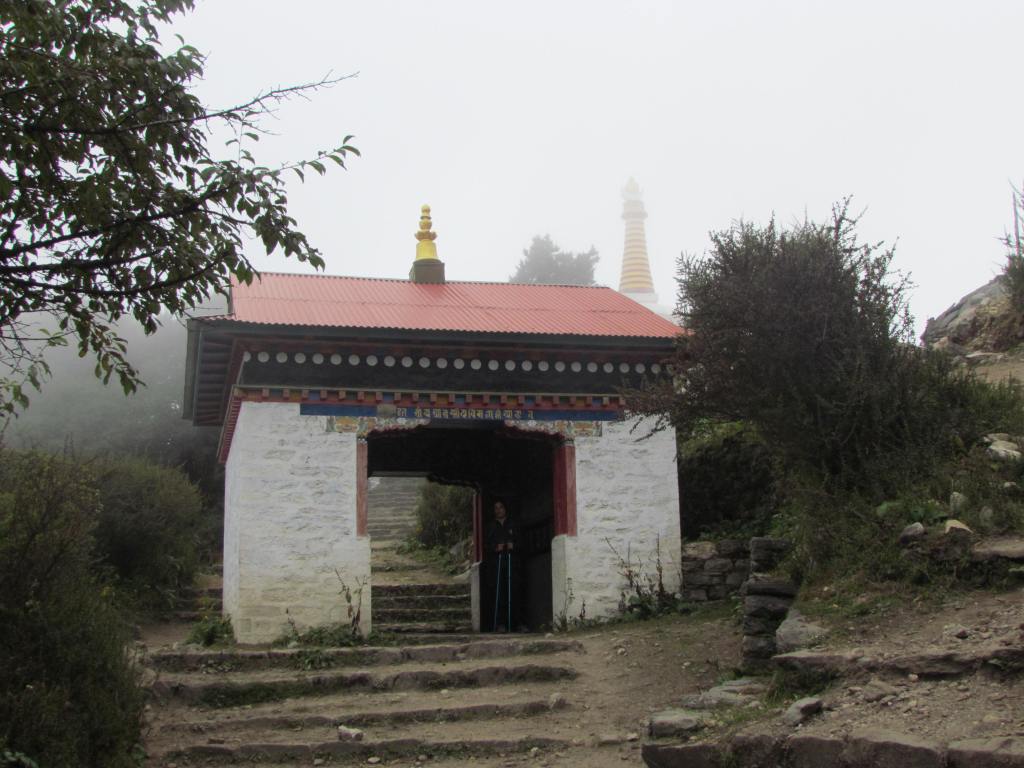
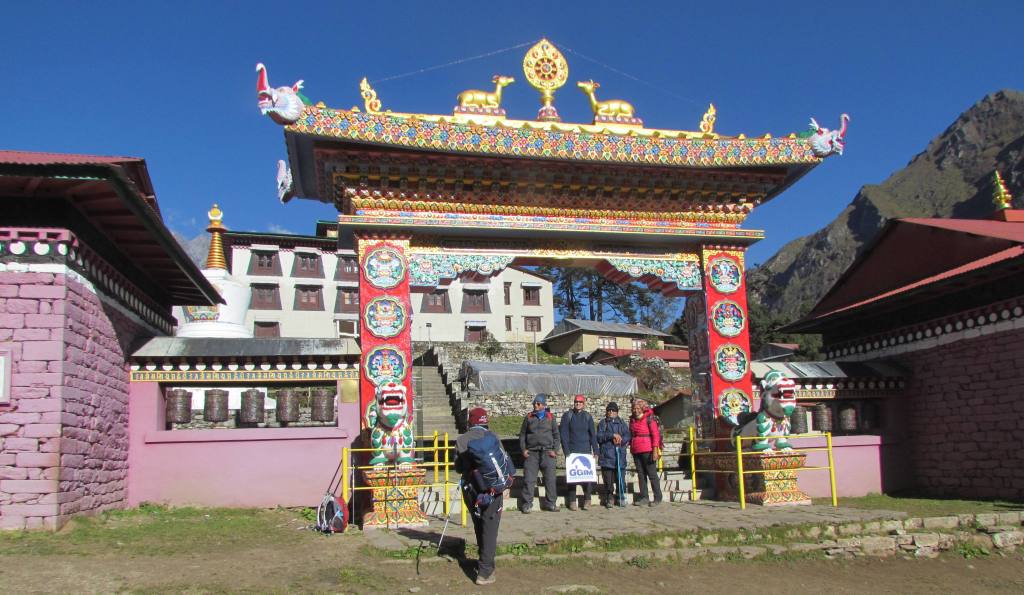
Tengboche consists of only a few of hotels, some shops and a famous monastery. All of them constructed around a football ground. Monks in the monastery play football very well.
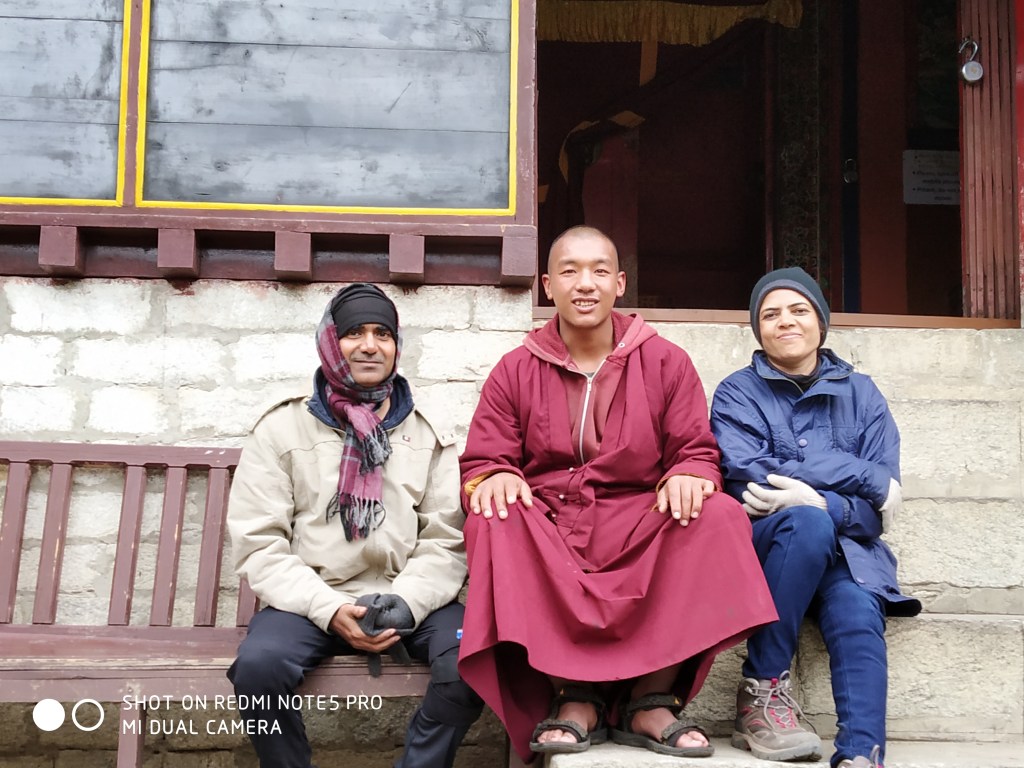
Dinesh did not allow us to rest and took us on a nearby hill. There was dense fog around and I could only guess the depth of the valley which was very close to the walkway.
Day 6: Tengboche – Dingboche
Next morning we had a clear view of Mt. Everest again. Now it was going to be off the sight.
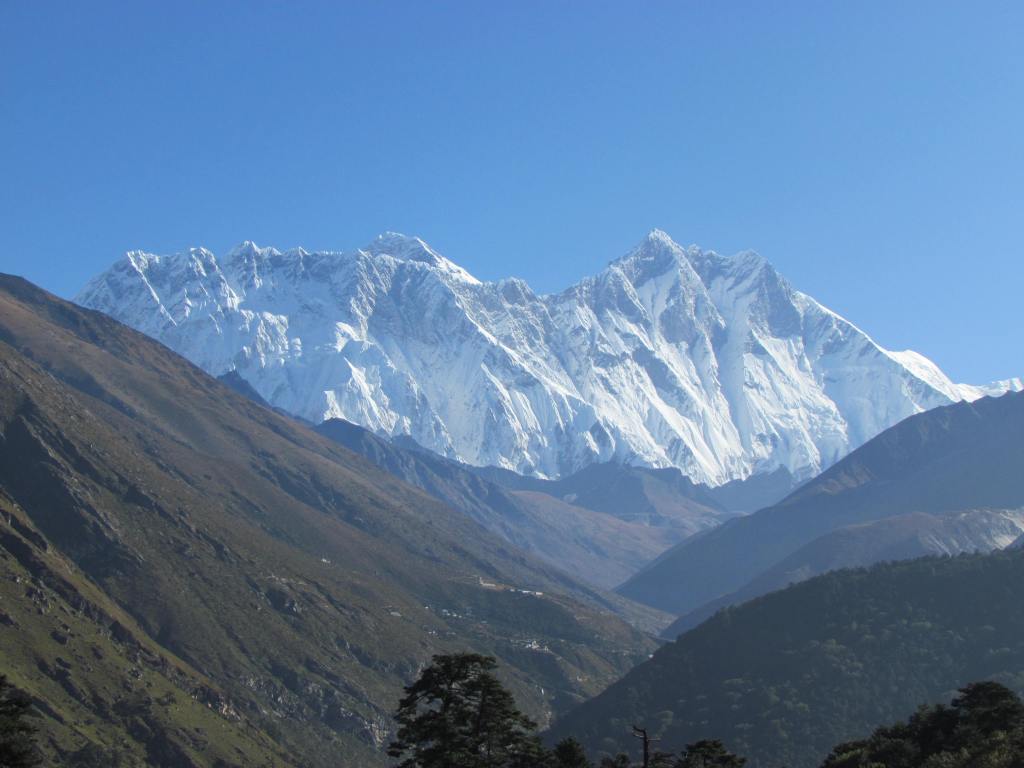
Our next destination was Dingboche. After walking for a couple of hours, we left the tree line and entered barren Tundra region. Mountains were covered with grass, small shrubs and wild flowers of many colors.
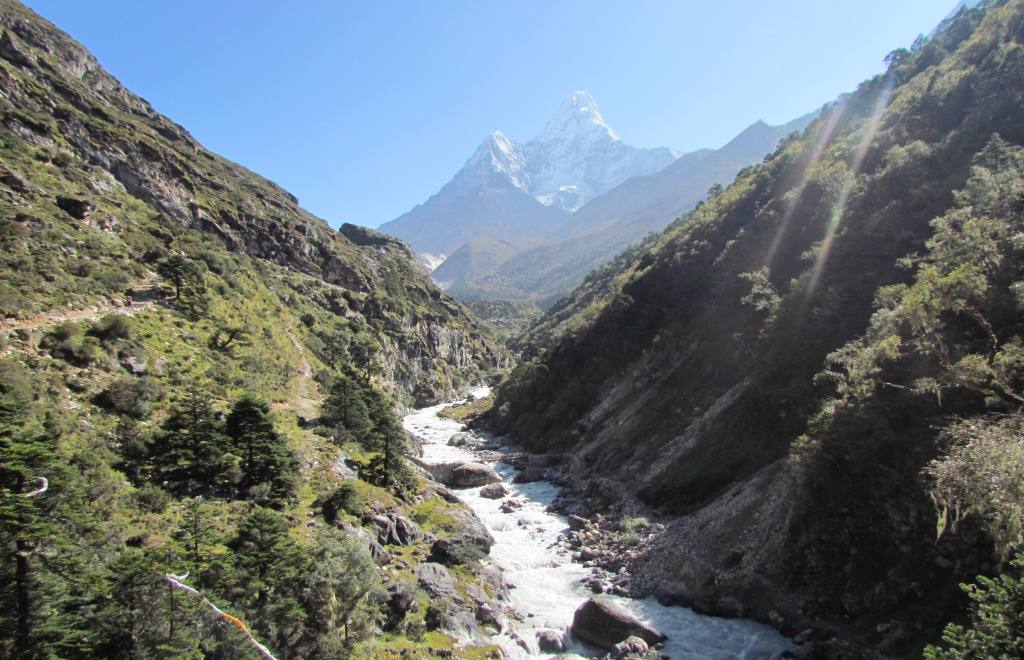
EBC trek offers amazing breathtaking views of nature and Tengboche to Dingboche is perhaps the most amazing walk. The route passes through barren mountains but they offer collage of infinite colors. Yaks can be seen grazing on the slopes.
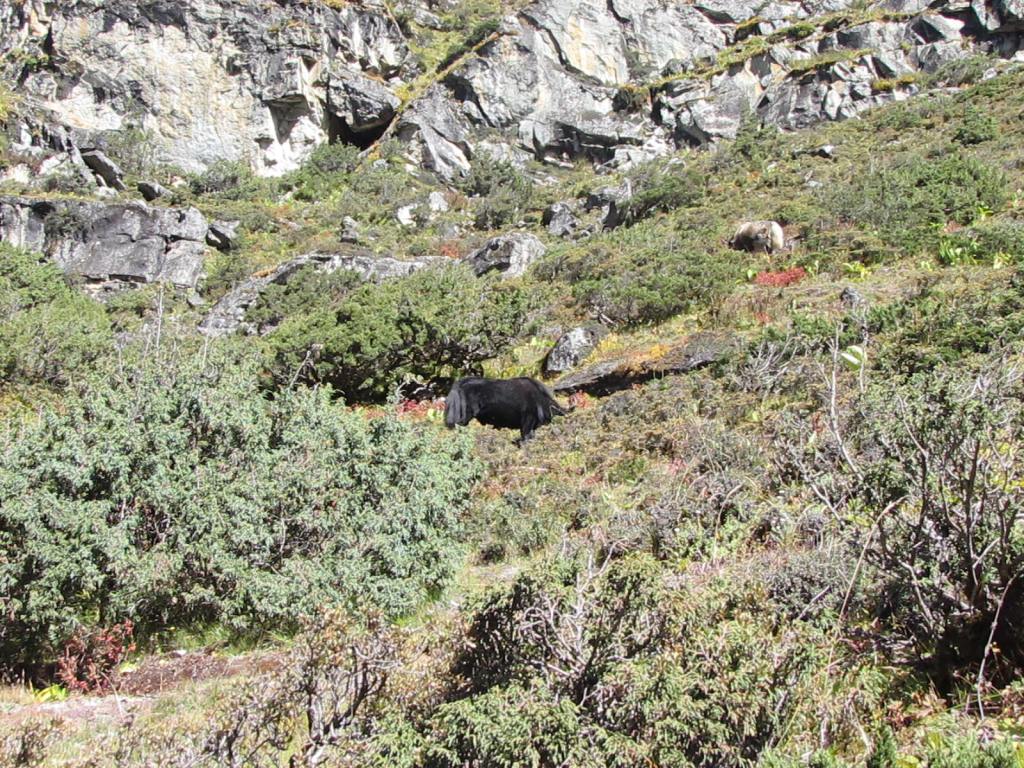
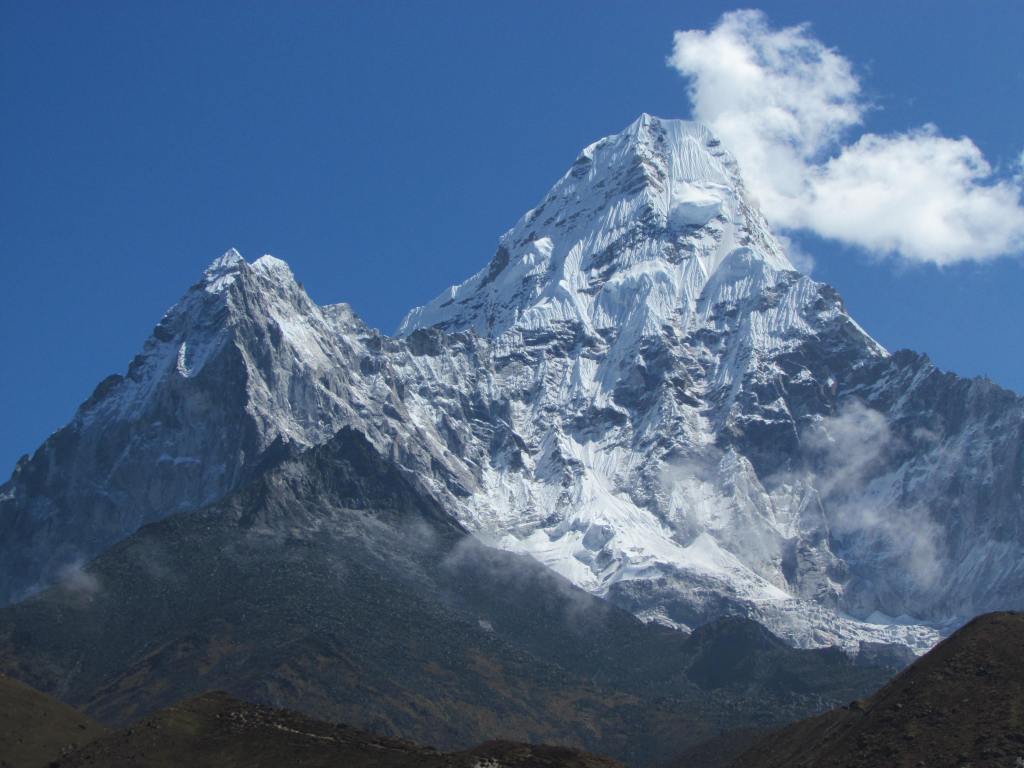
The best part of today’s journey was that it took us around Mt. Ama Dablam. It is a magnificent mountain with snow clad twin peaks. Dingboche is situated on the other side.
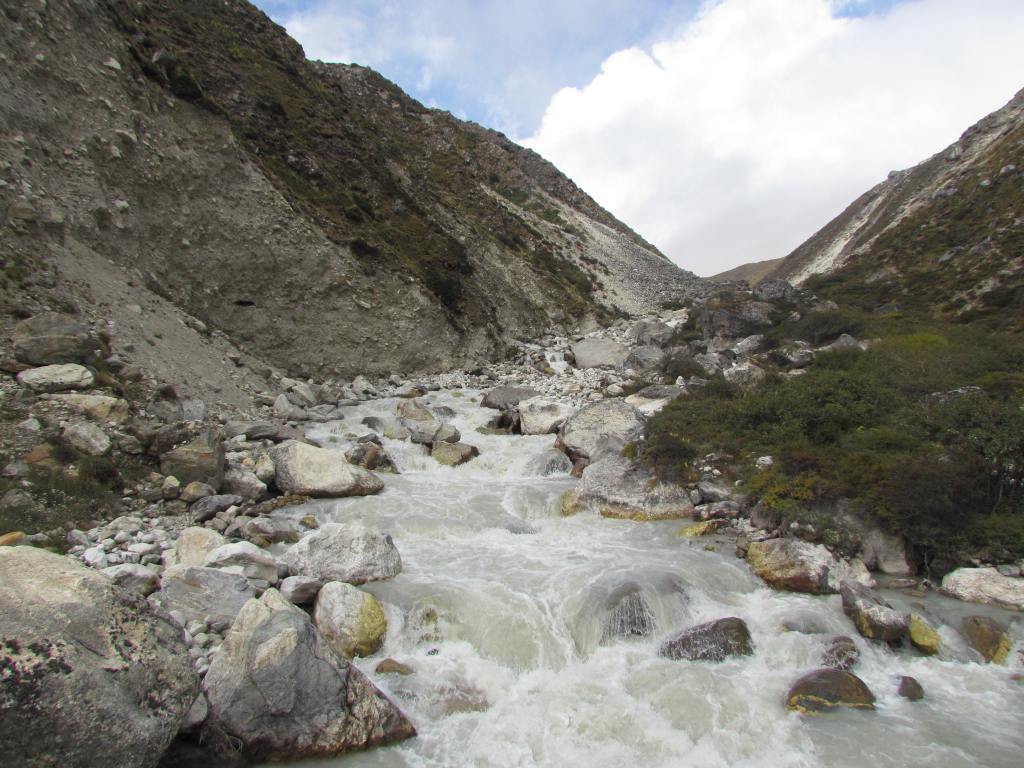
We crossed foaming Dudh Koshi on a small weak wooden bridge. Water was flowing at a tremendous velocity. Dinesh had a tough time getting everyone away from the bridge as everybody enthusiastically wanted to take pictures on it.
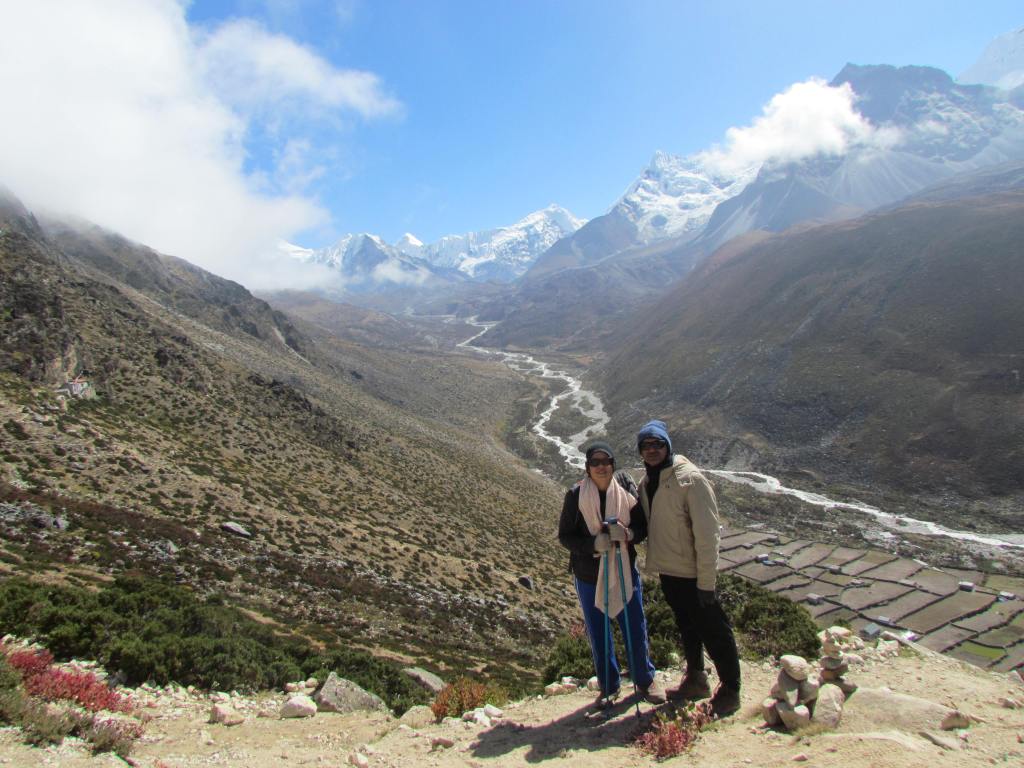
We reached Dingboche around 5 pm. It is small town with scattered houses and hotels. Once again Dinesh pulled out everyone for a walk in the evening. The town is almost flat but now we were getting exhausted after walking 10 meters in a stretch.
Our hotel was located at a beautiful place on the bank of a river called Imje Khola. Ama Dablam stood after the river.
Day 7: Acclimatization
Next day was a rest day for acclimatization. We climbed a nearby mountain and spent the day making trips to the river. We could see Mt. Makalu, the fourth tallest mountain on the earth.
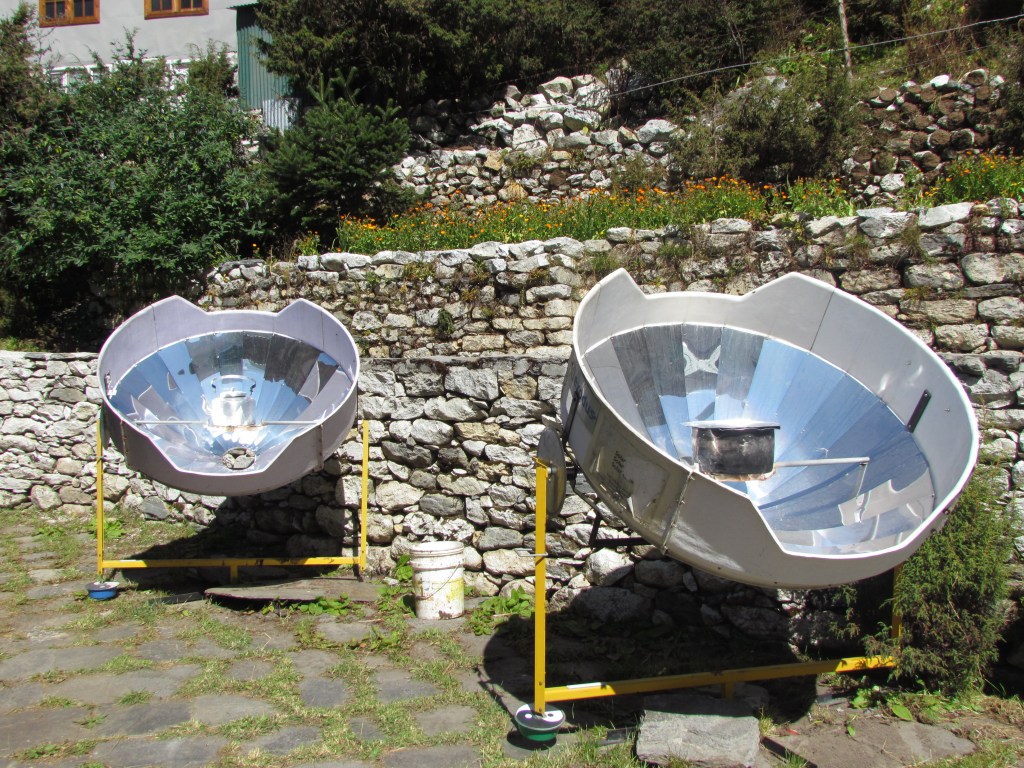
Living conditions in this region are really tough. It takes hours to boil a pot of water as people use solar energy. Electricity is scarce and one has to be careful not to waste it.
Day 8: Dingboche – Lobuche
Next day we resumed walk towards Lobuche. On our left a thin Dudh Koshi flowed in the valley. The mountains across the river were completely black with snow on top.
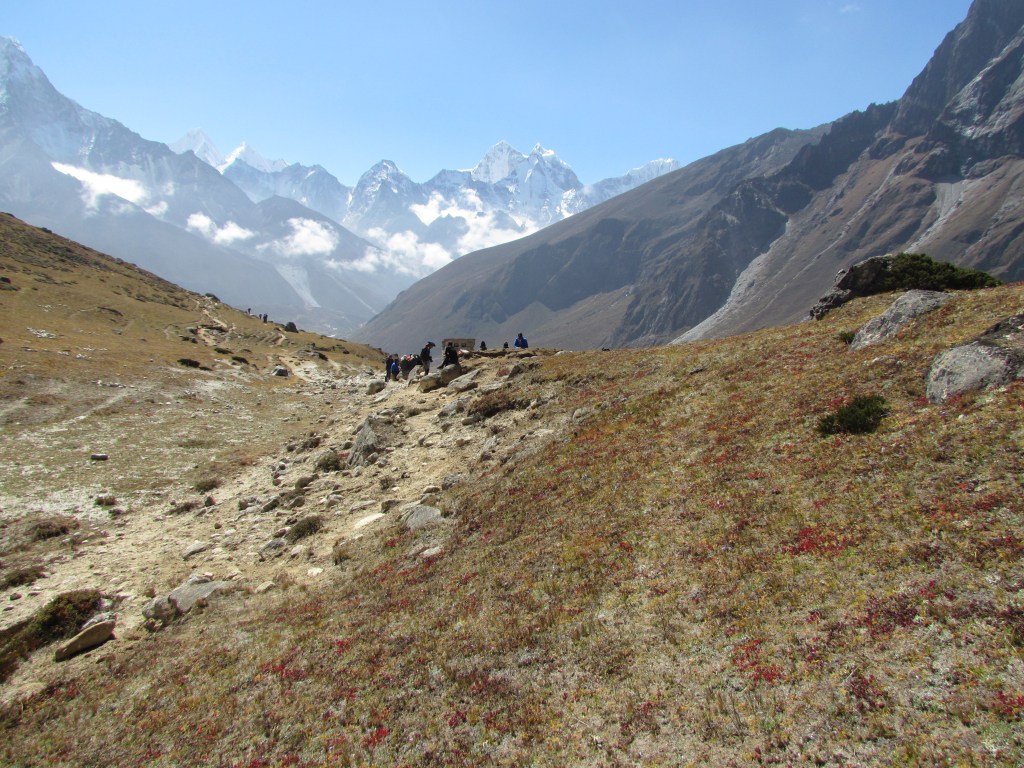
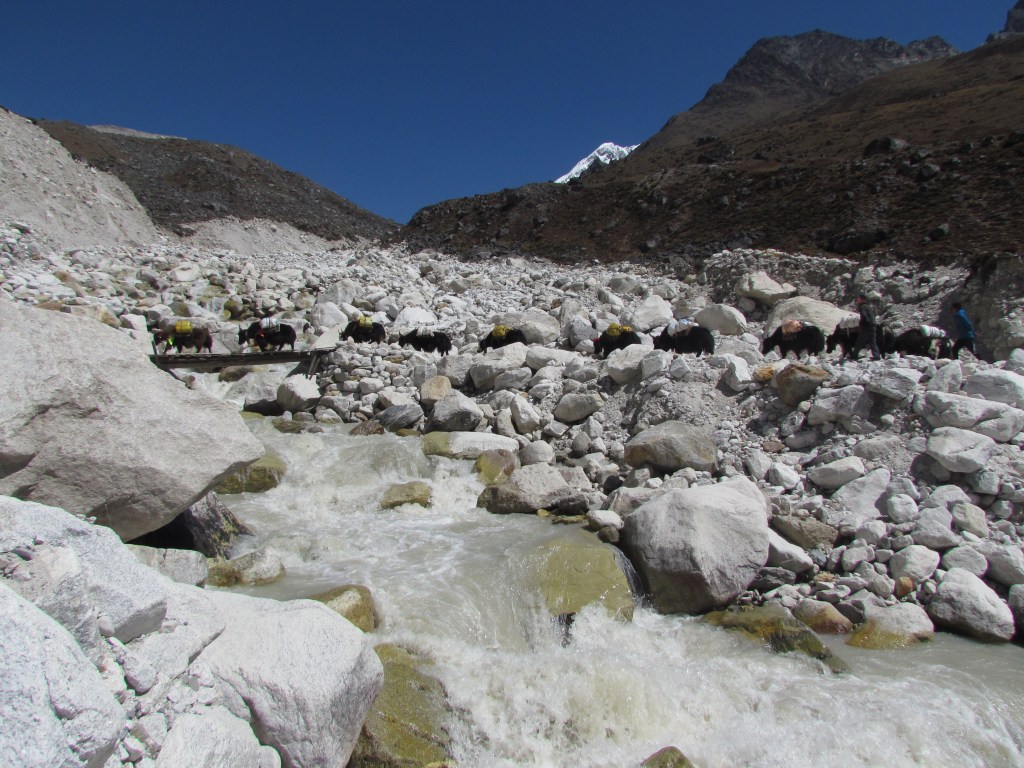
Around afternoon we had to cross the river near Dughla Fall. River bed was full of white rocks and there was a narrow bridge to cross. The group had gone ahead and I was left behind as I was taking too many pictures. I met a gentleman from Argentina and we started chatting. We had almost crossed the river and were about to start climbing the hill. Suddenly he noticed a group of yaks approaching the bridge. He suggested that we could get some good pictures so we turned back, climbed the rocks and got some good snaps.
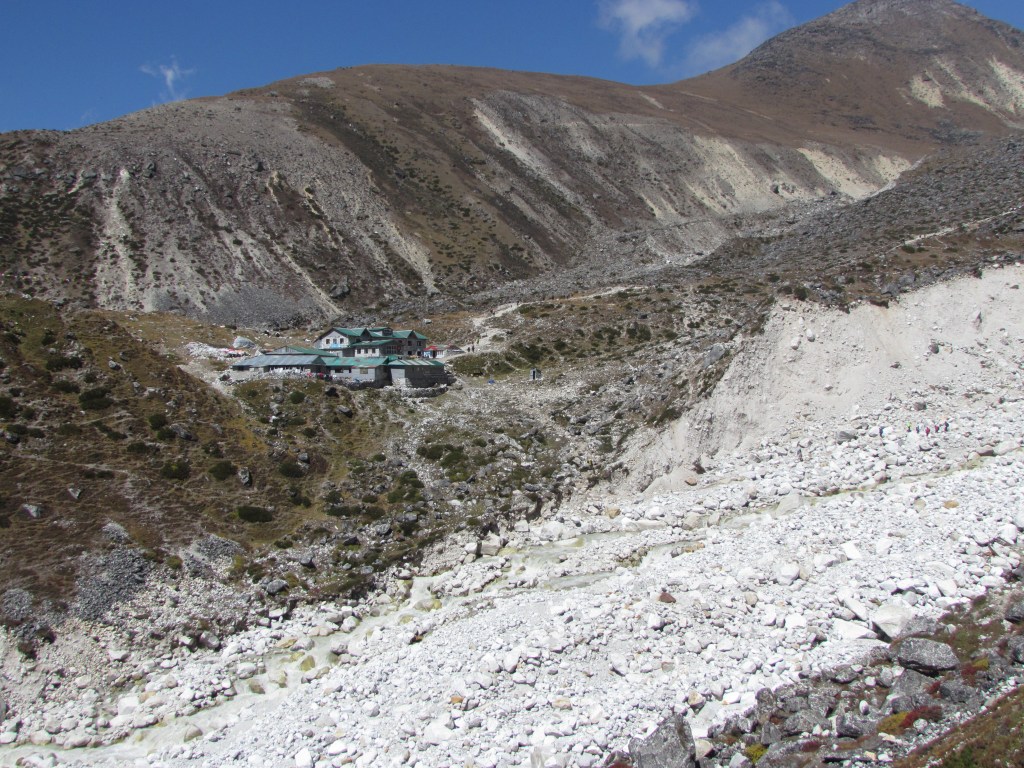
Immediately after crossing the river, there is Hotel Kaala Patthar. They offered the best Dal-Rice dish in the trek. Trekkers are advised to stick to simple diet to avoid stomach upsets so Dal-Rice is the only option.
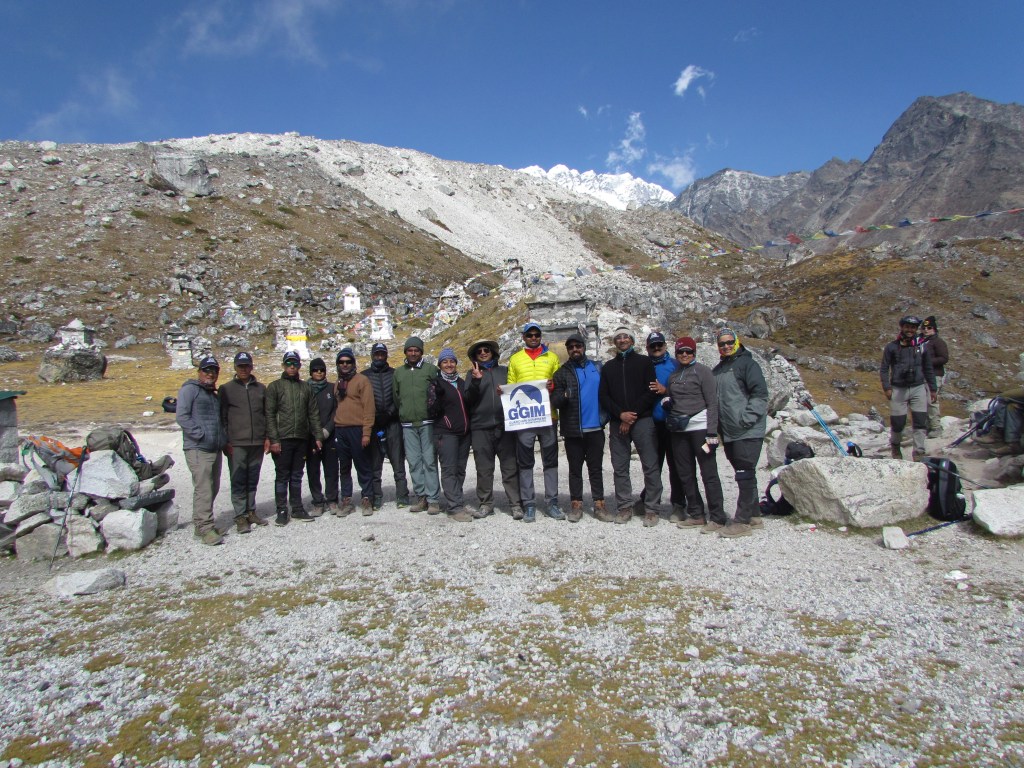
There was a steep climb of almost an hour after lunch which led us to the memorial of the mountaineers who died during different expeditions.
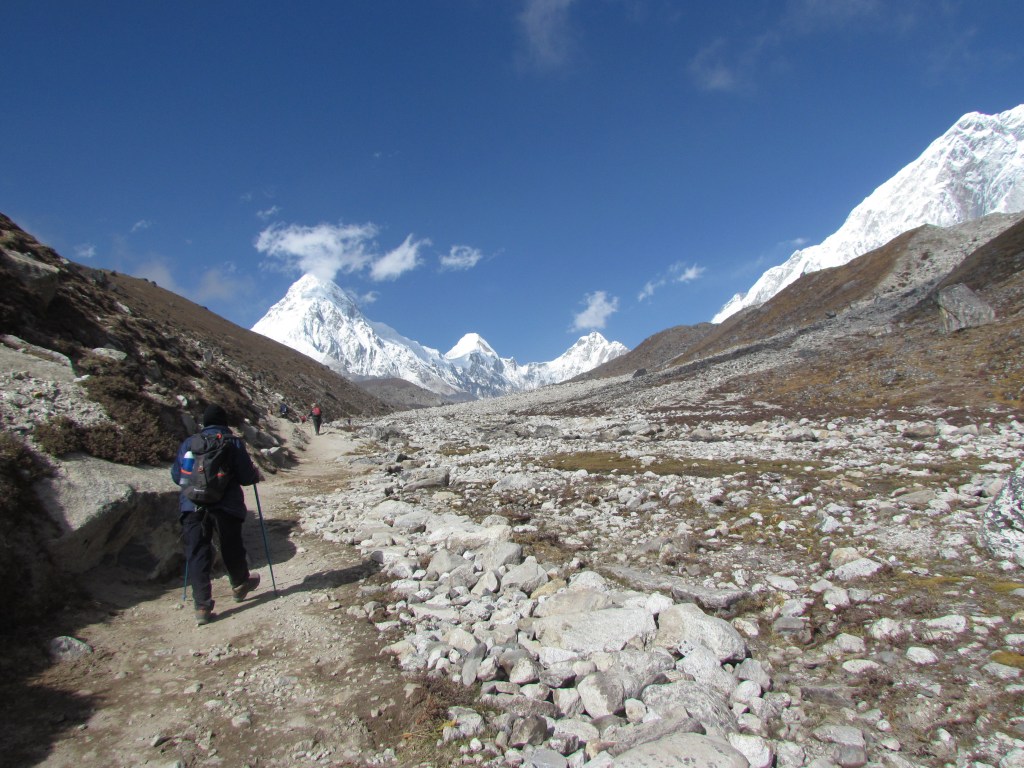
Now the road was completely silent. I could hear Dinesh talking to fellow trekkers clearly from a distance of half a kilometer. We reached Lobuche around 3 pm. There were a couple of hotels and a vast open ground with a hill at the background.
Lobuche gave an eerie feel. There was a vast ground covered with black burnt grass in front of the hotel with snow clad mountains surrounding from three sides, a silent stream of water in the ground and total calm at dusk.
Khumbu Glacier is situated behind a hill located about half a mile from the hotel. Dinesh took the group for a walk on the hill around 5 pm. Temperature was already in the sub zero range and it was extremely cold. A walk out at night at Lobuche offered a fantastic view of night sky.
At night when we retired, I helped Seema to enter the sleeping bag. She was asleep in a minute. I tried the same thing and realized that I could not breathe. The room was very suffocating. Finally I removed clothes and put some nasal drops. Only after such efforts I could get some sleep but was awake by 1 o’clock again and could not sleep later. I felt that it was end of my mission but next day friends in the group advised to keep the door of the room ajar and sleep in sitting position.
Day 9: Final Day
Today was the last lap of our journey to reach the base camp. We had overcome all the difficulties so far and everyone was excited to reach the destination.
At Dingboche, Manish had said to me and Seema “Initially it was a test of your physical strength, then it was test of your genetics (dealing with altitude) and now it will be test of your mental toughness”. Difficulties of the EBC trek could not be described better.
We stated in the morning for Gorakshep. Now the mountains resembled a desert. Snow desert on the top of the world. The walkway was strewn with boulders, ups and downs and was difficult to tread. After sometime we climbed a hill. Although it was small climb it took big efforts to reach the top. After reaching on top the vast Khumbu Glacier became visible on the right. Occasionally an isolated helicopter was flying over it towards the base camp.
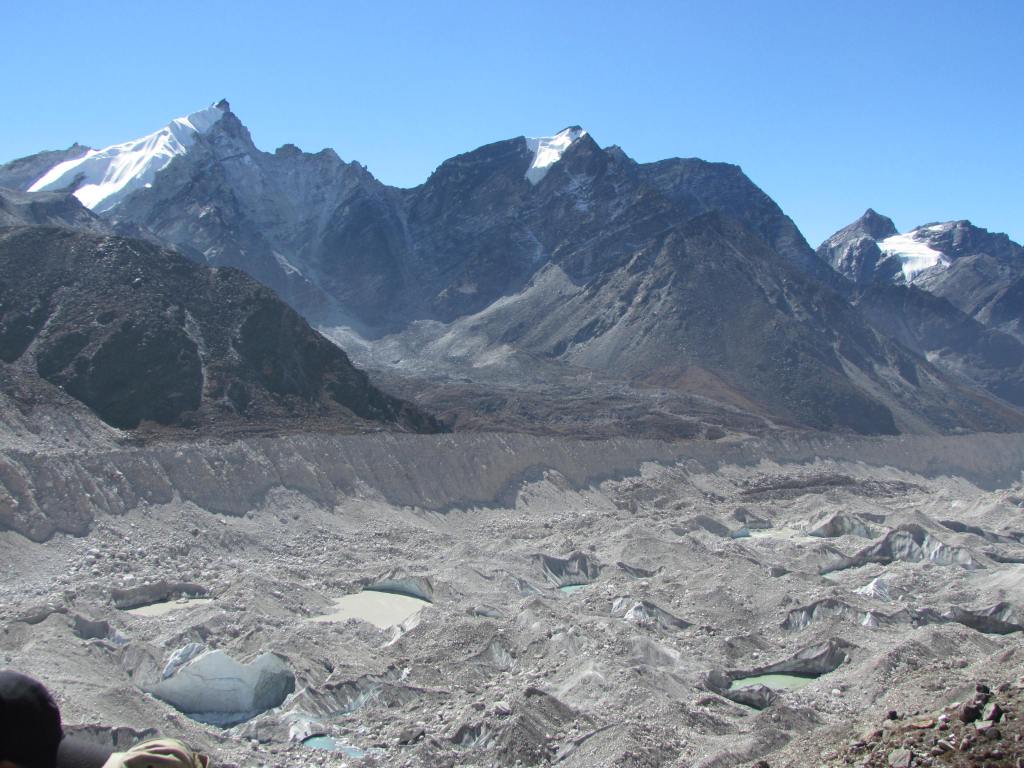
Frozen water covered with black soil marks the long stretch of the glacier. There was not a single green blade of grass anywhere.
A challenge awaited us ahead. A kilometer before Gorakshep, a big land slide had taken place and the path was covered with large white rocks. The team leaders of different trekking groups and the Sherpas got together and helped all the trekkers to pass safely. They did a commendable job of not only guiding the trekkers but also quickly clearing the path for yaks carrying luggage. Finally we reached Gorakshep around noon.
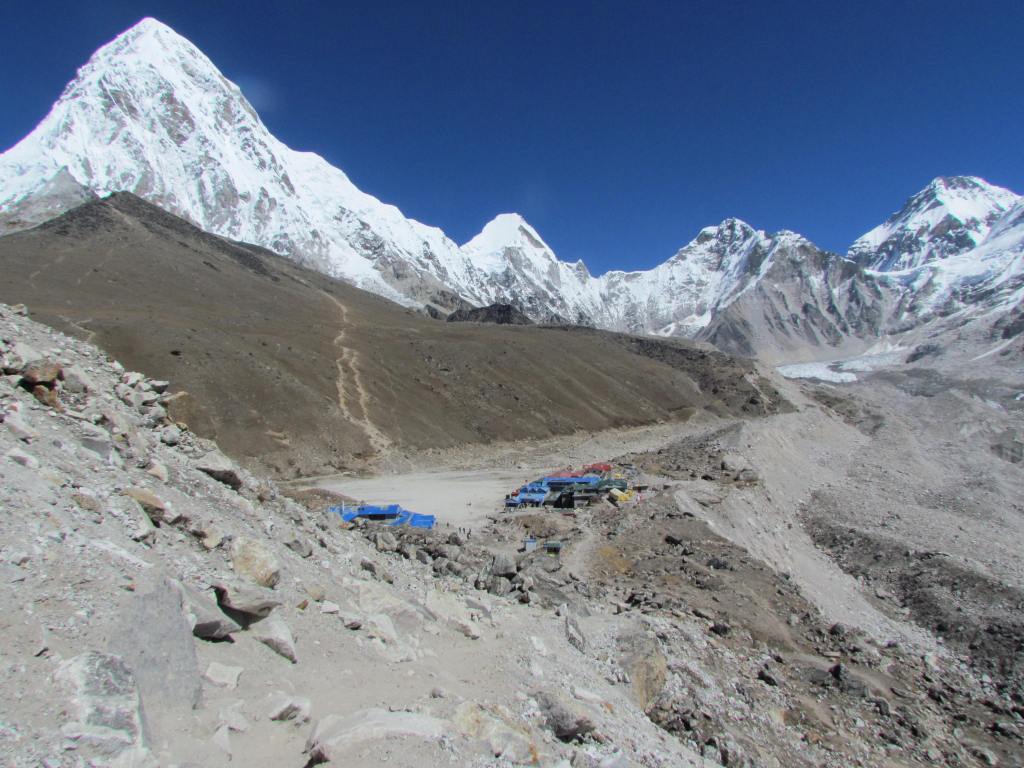
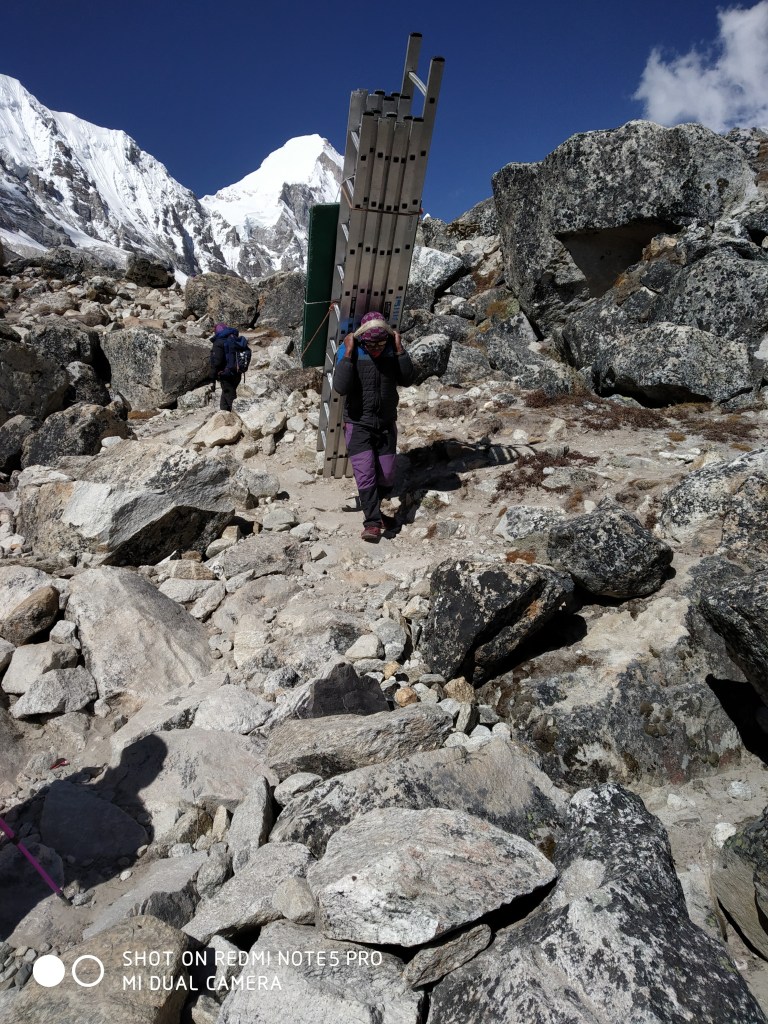
There was no time to rest so immediately after lunch we started for the base camp. It is about 4 kms away but the walk is extremely tiring. Passage is narrow and one has to walk through rocks. I was so exhausted that I left my camera at the hotel and decided to carry only mobile phone. On the way, we saw a Sherpa carrying several ladders. This trek makes us aware again and again about the tough realities of life in this region against the stark contrast of our comfortable urban life styles.
After about an hour we reached the board of Everest Base Camp but the joy was short lived. Base camp was still a couple of kilometers away.
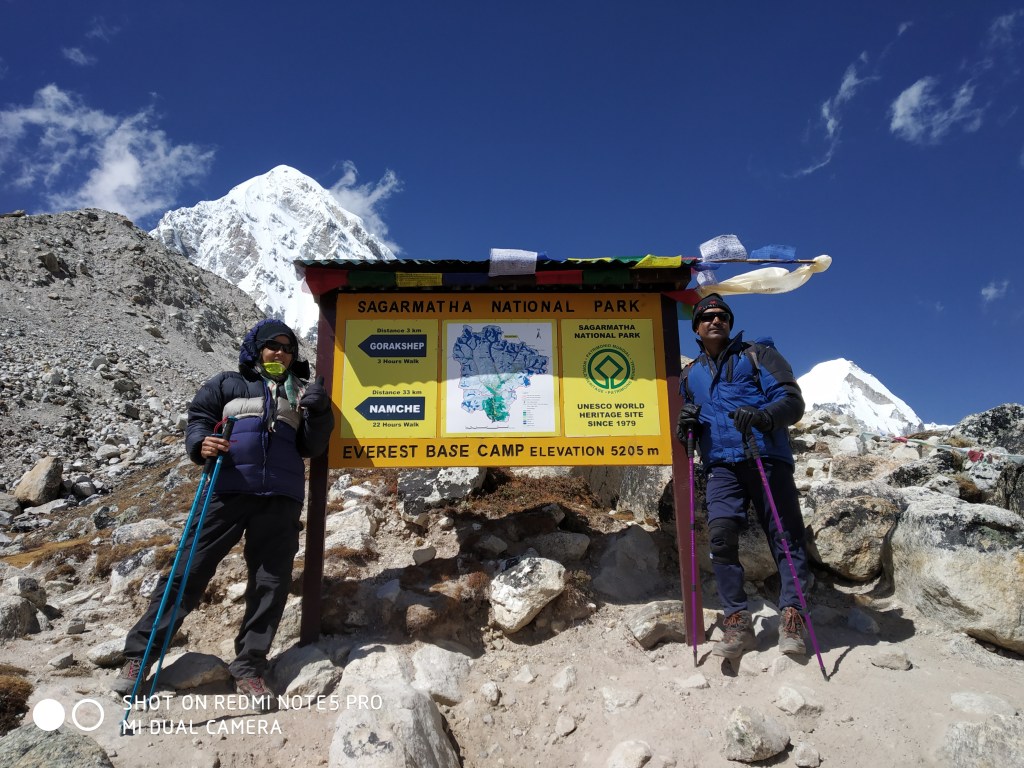
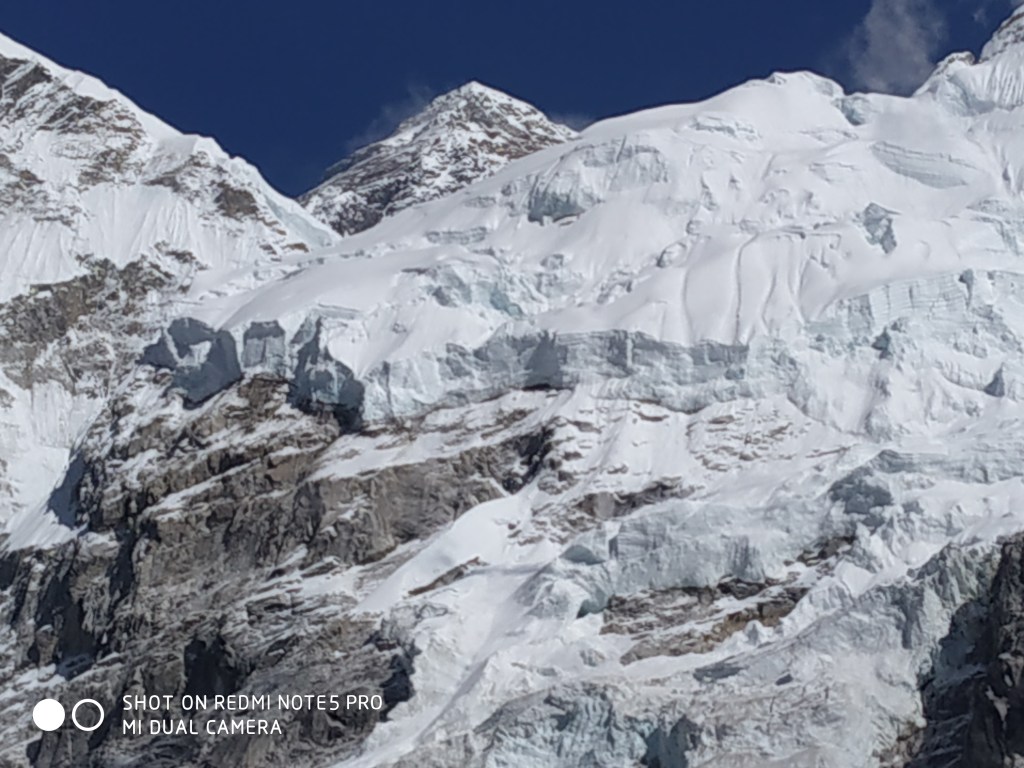
Now the great peak was clearly visible on our right. This was the closest we could go. Mt. Everest summit stands tall between Nuptse and North Column like an emperor flanked by his knights.
Everest Base Camp
Everest Base Camp is actually located lower than the hill that leads the way so we had to climb down. After doing a number of balancing acts, climbing the boulders finally we reached the destination.
We had done it. We were touching the feet of the mighty Mt. Everest and were standing at a place located at an altitude of 5200 meters.
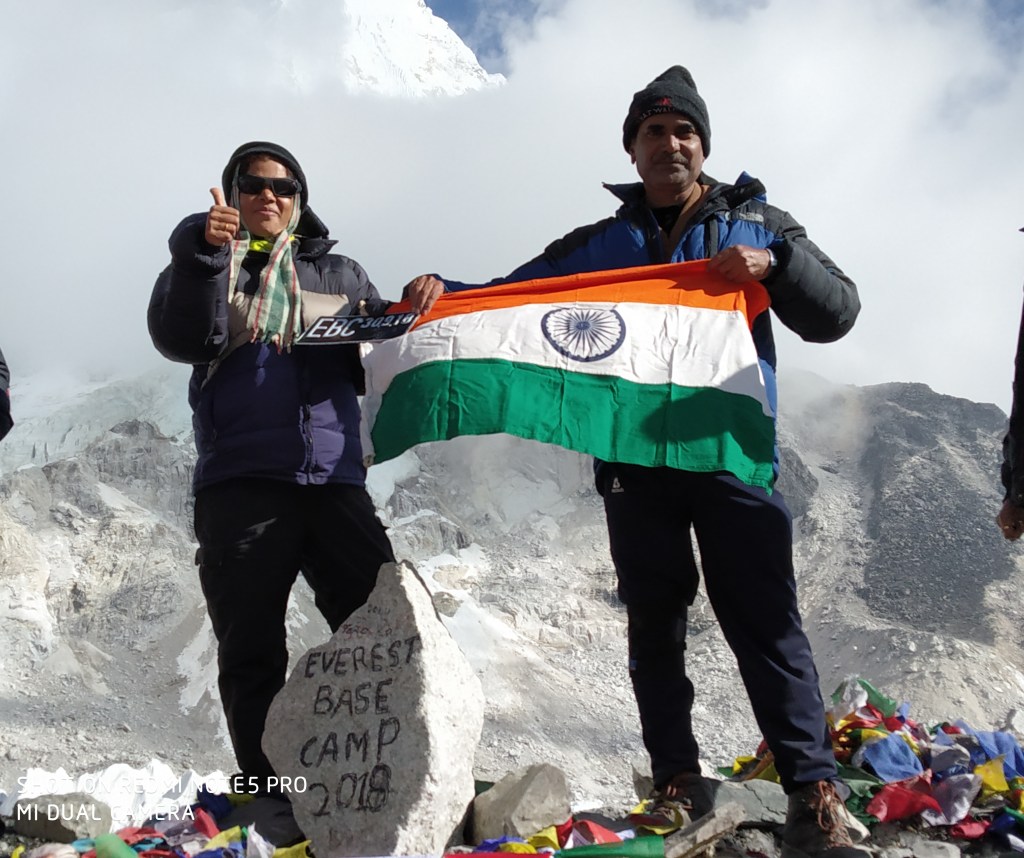
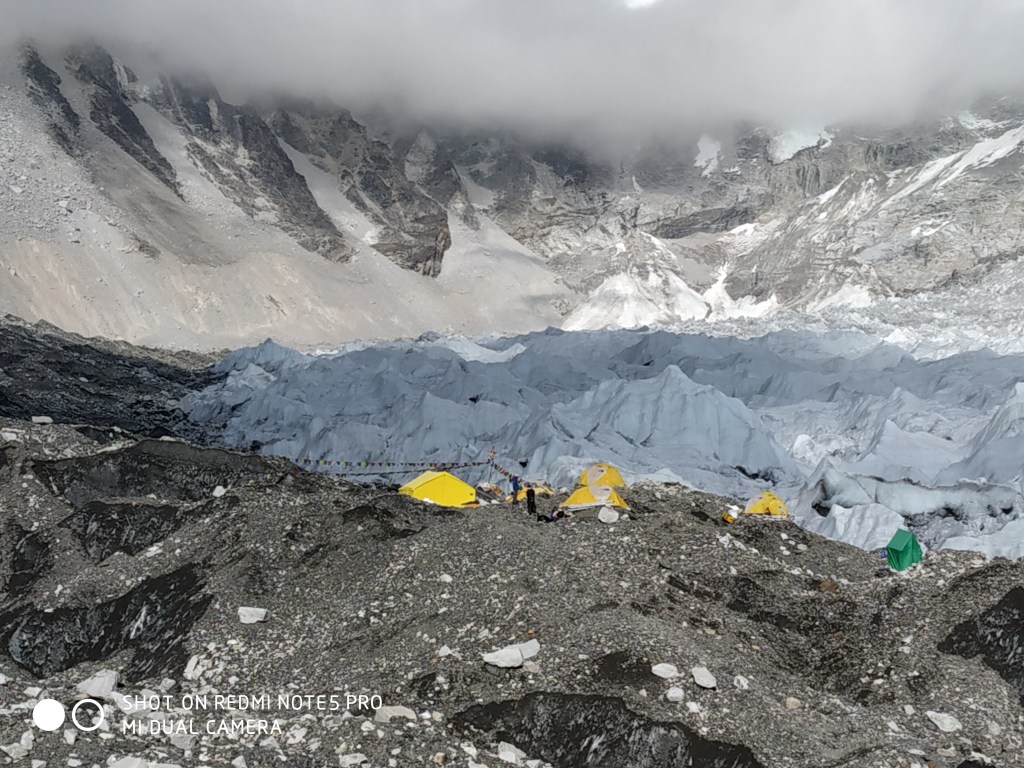
Enjoying one of the most exciting moments of the life, everybody was overjoyed, congratulating each other. Tents of the Everest climbers were located at some distance near the icy glacier. The famous ice fall from where the mountaineers start the expedition was very near. Pumori was in front of us and was glowing in the sun.
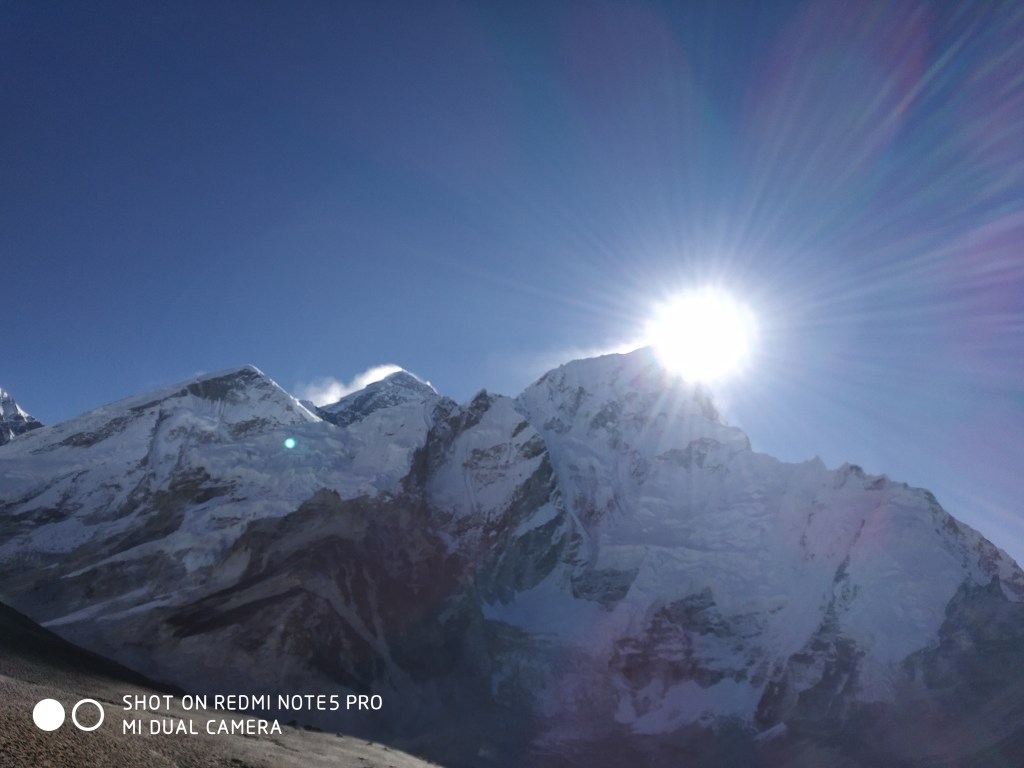
Only a side edge of Mount Everest can be seen from the base camp as it is hidden behind West Column peak but still it dominates the environment. EBC is probably the nearest spot to the largest peak in the world, where ordinary trekkers like me can reach and feel it.
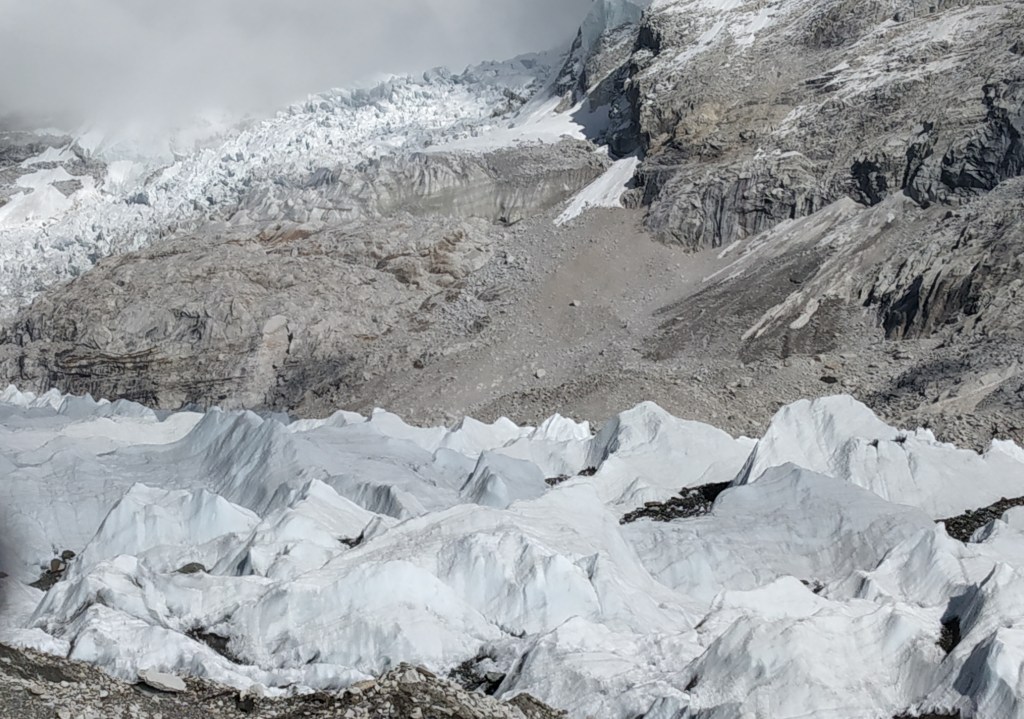
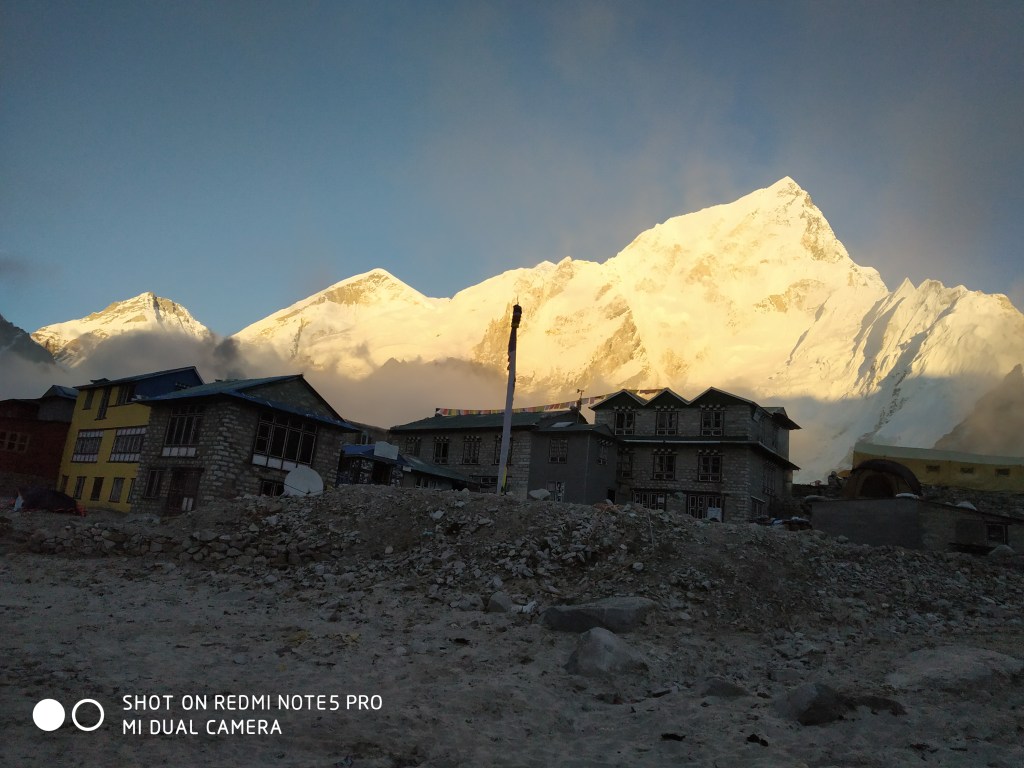
We started our return journey to Gorakshep. Sun was setting and the peaks started glowing in golden colour. There was no end to the surprises this trek was offering. We had seen the Himalayan peaks shining like silver in the moonlight on the first day while travelling to Phaplu. Now they shone like gold.
At night Seema and I went out and saw the clear sky glowing with billions of stars. The milky way could be seen from one end to other.
Next morning we decided to take a helicopter for the return journey. We had to climb Kaala Patthar to board it again. It provided us an opportunity again to sit in front of the great mountain for a couple of hours.
Seema and I had lived through an experience of our life time.

 Curious Explorer
मस्तच , वाचून स्वतः ते क्षण अनुभवल्यासारखं वाटलं.
LikeLike
Thanks
LikeLike
Tumacha ब्लॉग वाचला. फारच sundar आणि नेटके. तुम्ही या सगळ्या नोंदी कश्या thvalya. आज पुन्हा base कॅम्पला गेल्याचा अनुभव dilat. Eager to read next.
LikeLike
Thanks
LikeLike
Khup Chan. Barach athwani tazya zalya.
What next- together.
With lots of love.
God bless you both.
LikeLike
Thanks Kaushal
LikeLike